
Preventing Acrylic Nail Lifting: Professional Best Practices
Acrylic nail lifting is the separation of the acrylic enhancement from the natural nail plate, typically caused by improper preparation or contaminated surfaces. To prevent acrylic nail lifting, technicians must prioritize thorough cuticle removal, use a pH-balancing dehydrator, and apply a professional-grade primer to create a strong chemical bond.
Advanced Nail Plate Preparation Techniques
Achieving long-lasting results in busy salons in New York requires meticulous prep work.
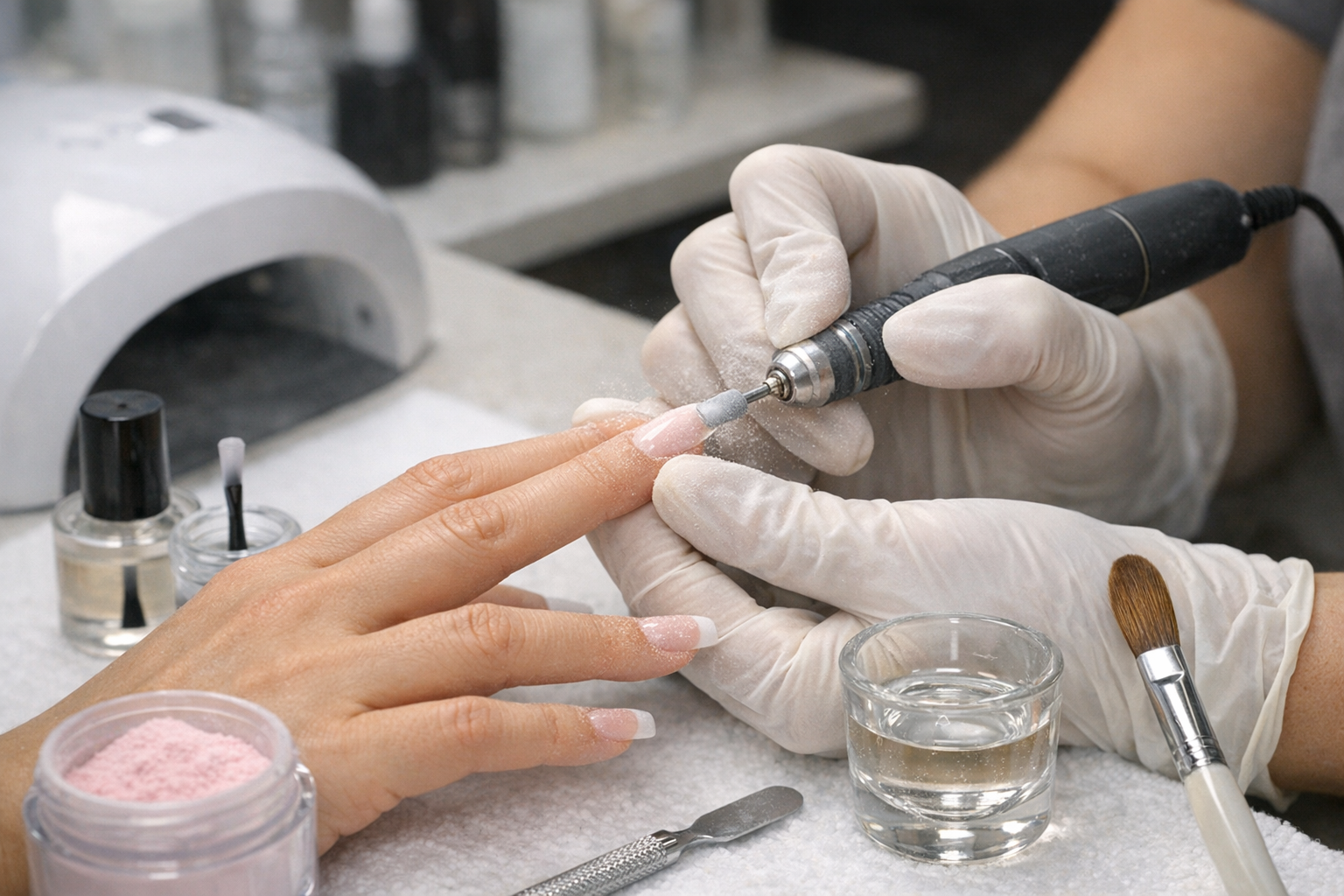
You must remove all non-living tissue from the nail plate using a high-quality e-file bit or a manual pusher.
Residual oil or skin left on the surface is the primary cause of early enhancement failure.
After mechanical preparation, the nail must be chemically cleansed.
Using a professional dehydrator ensures that any moisture or surface oils are completely removed.
This step is critical for nail technicians in Texas to combat humidity-related adhesion issues.
Managing Liquid-to-Powder Ratios for Durability
An inconsistent liquid-to-powder mix ratio often leads to brittle enhancements or service breakdown.
A bead that is too wet will shrink excessively, pulling away from the sidewalls and cuticle area.
Conversely, a bead that is too dry will not have enough monomer to create a secure bond.
In humid environments like Florida, the curing time may vary, significantly affecting the bond.
Maintain a consistent temperature in your workspace to ensure the chemical reaction occurs predictably.
Proper ratio control is a hallmark of high-performance salon operations.
Troubleshooting Common Application Errors
Placing acrylic product too close to the eponychium causes immediate lifting as the natural nail grows.
Always leave a tiny margin—the thickness of a hair—between the product and the skin.
This best practice is a standard requirement for top-tier salons in California.
Addressing Contamination Risks
Touching the natural nail plate after it has been dehydrated introduces oils from your fingertips.
Dust trapped in the sidewalls also prevents the acrylic from sealing correctly against the plate.
Always use a clean, lint-free wipe and 99% isopropyl alcohol to clear all debris before application.
Structural Balancing and Stress Points
If the apex of the nail is misplaced, the leverage on the free edge can pull the product upward.
Proper balancing ensures the weight of the enhancement does not strain the natural bond.
Check the architecture of the nail from the side profile to ensure the stress area is reinforced.
Standard Hygiene and Tool Maintenance
Dull files or contaminated brushes can interfere with the chemistry of the acrylic system.
Ensure all files are high-grit and fresh to prevent fraying the keratin fibers of the natural nail.
Clean your sable brushes regularly to prevent hardened monomer from affecting bead placement.
Using these professional standards will significantly reduce client complaints and redo services.
Mastering these troubleshooting steps ensures your reputation as a skilled technician remains solid.
Consistency in these protocols leads to higher retention rates and salon growth.
