
Preventing Acrylic Nail Lifting: Pro Tips & Troubleshooting
Acrylic nail lifting is one of the most common challenges faced by nail technicians in busy American salons.
This issue not only compromises the durability of the service but can also lead to moisture entrapment and nail health concerns.
Understanding the root causes of lifting is essential for delivering high-quality, professional results.
Mastering the Preparation Phase
Effective Mechanical Preparation
The most frequent cause of lifting is inadequate preparation of the natural nail plate.
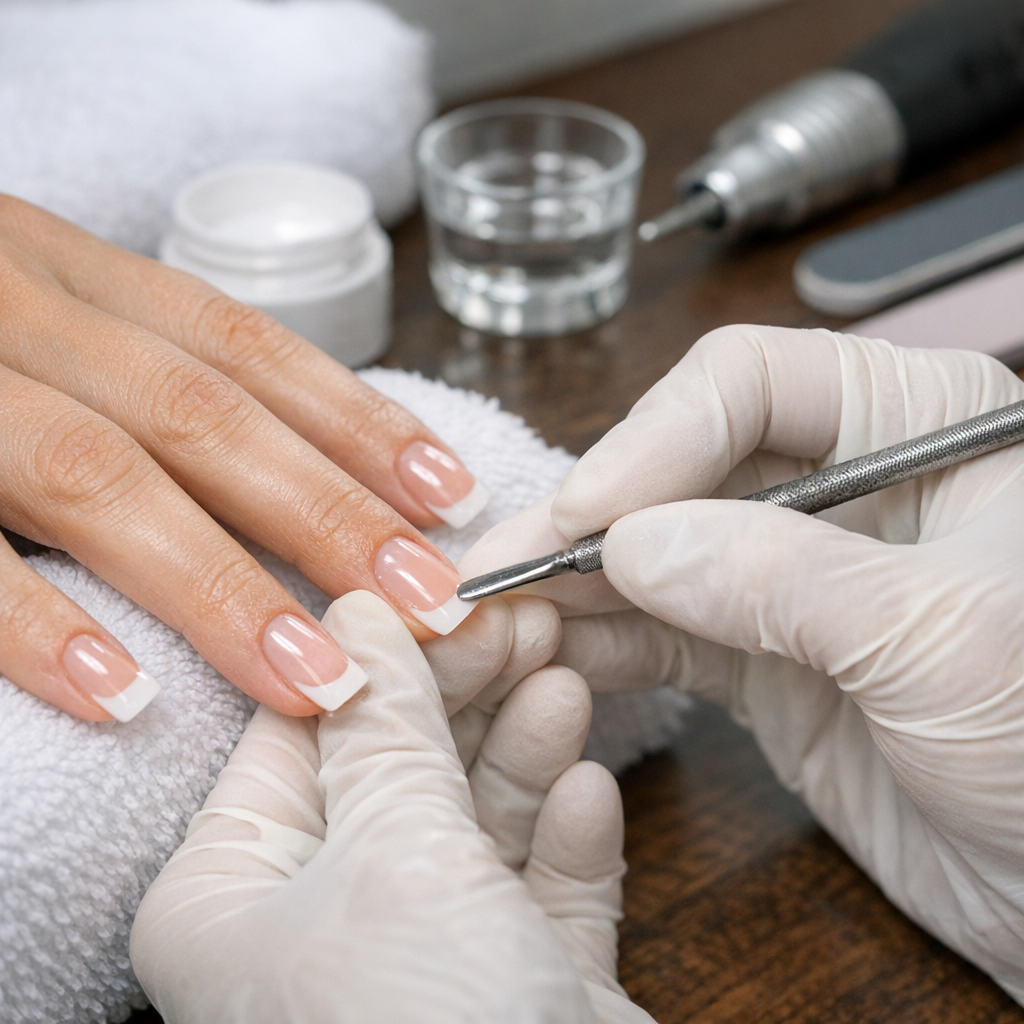
Technicians must ensure that all non-living tissue, or the true cuticle, is completely removed from the nail surface.
Using a fine-grit sanding band or a specialized e-file bit helps create the necessary surface area for product adhesion.
In high-volume salons in states like California, efficiency often leads to rushed prep, which is a mistake.
Ensure the nail plate is free of shine by gently buffing in the direction of nail growth.
This creates a “rough” texture that allows the acrylic monomer and polymer to anchor securely.
Chemical Dehydration and Priming
After mechanical prep, chemical dehydration is a critical step that cannot be skipped.
Apply a high-quality nail dehydrator to remove surface oils and temporary moisture from the nail layers.
Follow this with a professional-grade primer tailored to the client’s specific nail type and condition.
Perfecting the Acrylic Application
Controlling the Liquid-to-Powder Ratio
An incorrect mix ratio is a leading technical error that results in brittle or lifting acrylics.
A bead that is too wet will shrink excessively as it cures, pulling away from the nail edges.
Conversely, a bead that is too dry will not have enough monomer to create a chemical bond with the nail plate.
Practice consistency by wiping your brush appropriately before picking up the polymer powder.
The bead should look like a smooth, satin pearl and should not run immediately upon contact with the nail.
Maintaining this balance is vital for the structural integrity of the nail enhancement.
The Cuticle Area “Flush” Technique
Product touching the skin or eponychium is a guaranteed cause of lifting as the natural nail grows.
Always leave a tiny margin—about the thickness of a hair—between the acrylic product and the soft tissue.
Taper the product thin at the cuticle area to ensure a flush transition that prevents catching.
Environmental and Lifestyle Factors
Managing Humidity and Temperature
The environment inside your nail salon significantly impacts the curing process of professional chemicals.
In humid climates like Florida, acrylic may set faster or behave differently than in drier regions.
Adjust your working speed and monomer choice to account for the ambient temperature of your workstation.
Troubleshooting Common Client Issues
If a client consistently experiences lifting, assess their daily activities and nail health.
Clients who use their nails as tools or have frequent exposure to harsh cleaning chemicals are at higher risk.
Educate them on the importance of using nail oil to keep the enhancement flexible and resilient.
Sanitation and Safety Standards
Proper sanitation is not just a legal requirement in the United States; it is a best practice for product performance.
Contaminants on the nail plate or in your dappen dish can interfere with the chemical bond of the acrylic.
Always use fresh monomer for every client and ensure all metal implements are hospital-grade disinfected.
By following these professional troubleshooting steps, you can significantly reduce lifting incidents.
Consistent technique and high standards lead to satisfied clients and a thriving nail business.
Focusing on the details of prep and application ensures every set of nails is built to last.
