

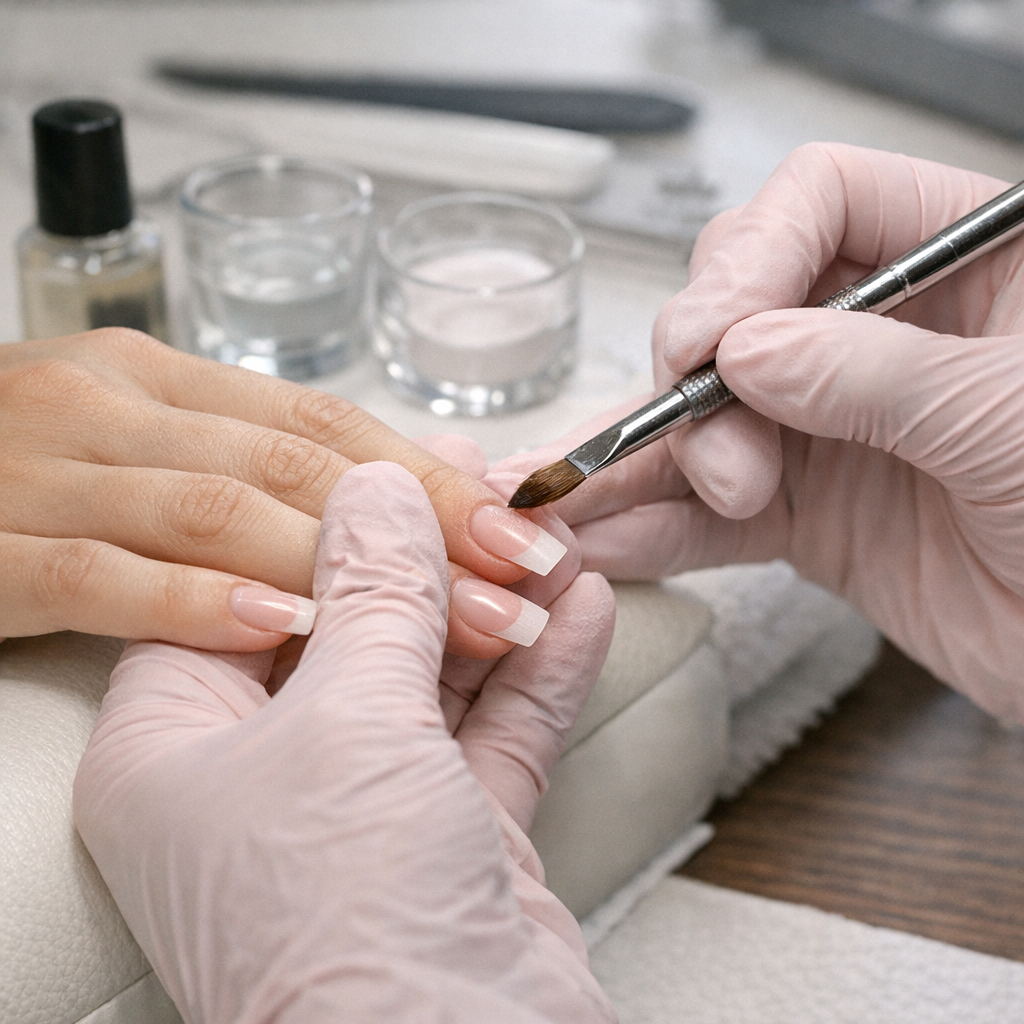
Preventing Acrylic Nail Lifting
Preventing acrylic nail lifting requires meticulous natural nail plate preparation, including complete cuticle removal and thorough dehydration. Nail technicians must ensure correct liquid-to-powder ratios and avoid product contact with the skin or eponychium. Proper sealing of the perimeter and balanced apex placement are essential for long-term nail enhancement durability and adhesion.
Advanced Preparation Best Practices
The foundation of preventing acrylic nail lifting starts with mechanical preparation. Use a high-quality 180-grit file or a medium sanding band to remove the natural shine from the nail plate.
Ensure all non-living tissue is removed from the nail surface using a pusher and a nipper if necessary. In high-volume salons in California, technicians often use dry manicure techniques to ensure the nail plate is perfectly clean.
Chemical preparation is equally vital for long-term wear. Use a pH-balancing dehydrator followed by a high-quality primer to create a chemical bond between the natural keratin and the acrylic polymer.
Mastering Liquid and Powder Ratios
An improper mix ratio is a leading cause of service breakdown. A bead that is too wet will shrink excessively, pulling away from the sidewalls and causing lifting at the edges.
Conversely, a bead that is too dry will not achieve a proper bond with the nail plate. This leads to air pockets and brittle enhancements that may pop off entirely during daily client activities.
Practice consistency by dipping the brush into the monomer and wiping away the excess against the side of the dappen dish. This control is essential for technicians working in humid climates like Florida.
Precision Product Application
Maintain a “hairline” margin between the acrylic product and the surrounding soft tissue. If the monomer-dampened powder touches the skin, it will inevitably lift as the natural nail grows out.
Use the belly of the brush to press the product firmly against the nail plate in the cuticle area. This mechanical pressure forces the acrylic into the microscopic grooves created during the filing stage.
Taper the product toward the edges to ensure a flush finish. Thick edges near the proximal nail fold are prone to catching on hair and clothing, which creates leverage that pulls the enhancement up.
Troubleshooting Common Durability Issues
Cracking and lifting often occur when the apex is misplaced. A structural apex must be built over the stress area to support the length of the nail and prevent mechanical stress.
Check your lamp and workspace temperature regularly. Extreme cold in northern states like New York can slow down the polymerization process, affecting how the acrylic settles on the nail.
Always instruct clients on proper aftercare, such as avoiding the use of nails as tools. Providing a small bottle of cuticle oil helps keep the enhancement flexible and reduces the risk of side-loading cracks.
Refining Finishing Techniques
Final filing should include a thorough check of the sidewalls and the free edge. Ensure there are no jagged edges or thin spots where the product meets the natural nail.
Use a fine-grit buffer to smooth the surface without thinning the product too much at the stress points. A well-sealed free edge prevents water and oils from seeping under the enhancement.
Consistency in these best practices ensures high retention rates and client satisfaction. Proper execution reduces the need for expensive repair appointments and builds a professional reputation for quality.
