

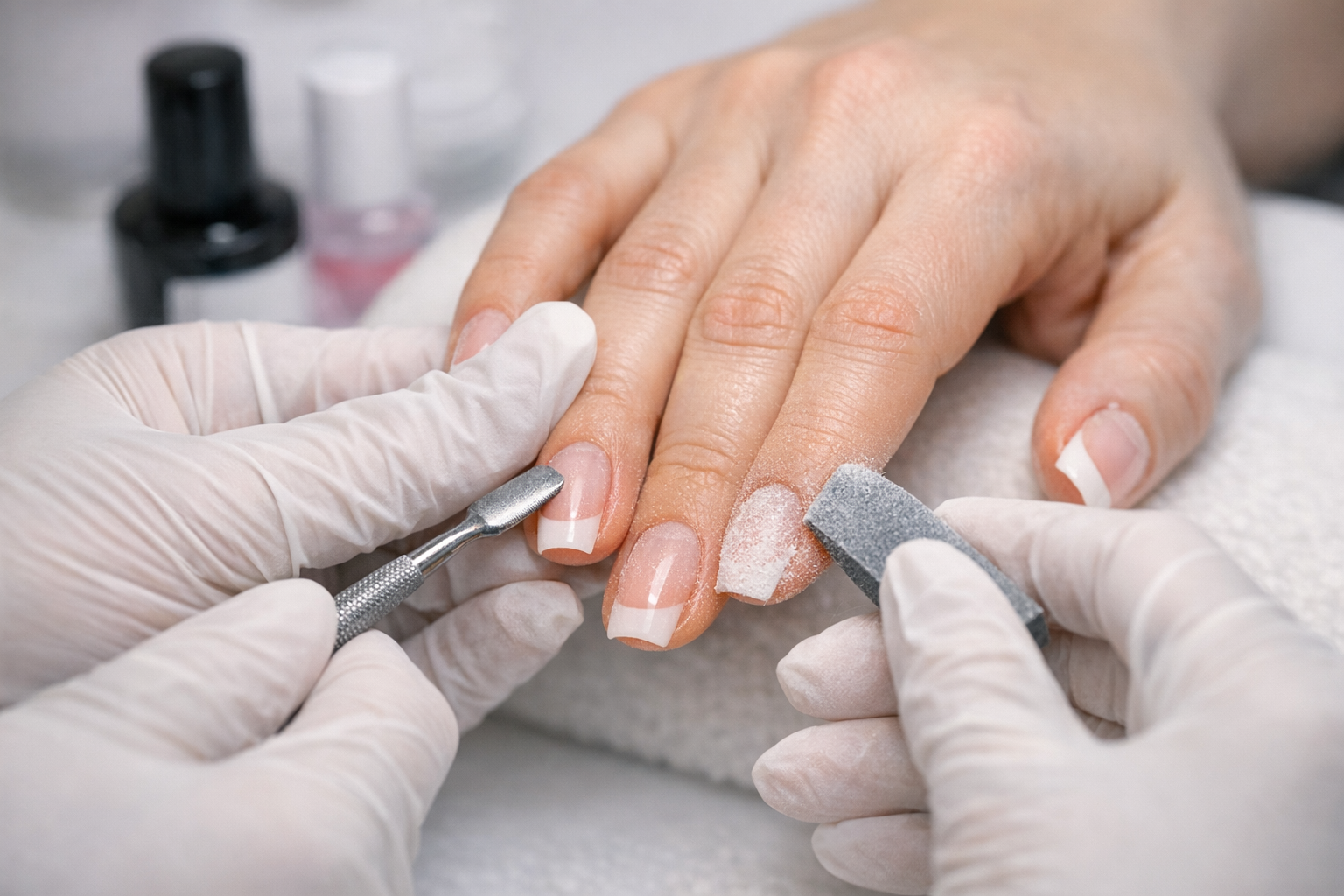
Preventing Acrylic Nail Lifting
Preventing acrylic nail lifting requires thorough natural nail plate preparation, including mechanical cuticle removal and chemical dehydration. Nail technicians must apply primer correctly and ensure the acrylic product never touches the surrounding skin or eponychium. Maintaining precise liquid-to-powder ratios and finishing with proper filing techniques ensures a durable, long-lasting nail service.
Professional Nail Plate Preparation
The most common cause of lifting is improper preparation of the natural nail surface.
Technicians must remove all non-living tissue from the nail plate using a pusher or e-file.
Even microscopic traces of cuticle can cause the acrylic to lose its bond over time.
After cleaning the surface, use a high-quality dehydrator to remove surface oils and moisture.
In humid regions like Miami, Florida, this step is critical for service longevity and adhesion.
Wait for the nail plate to appear chalky white before applying the professional-grade primer.
Effective Priming Techniques
Apply primer sparingly to avoid flooding the lateral nail folds or the eponychium area.
Acid-based primers provide a strong chemical bond but require careful handling for client safety.
In busy New York City salons, non-acid primers are often preferred for their speed and efficiency.
Mastering Acrylic Application and Ratios
The chemical balance between liquid monomer and polymer powder determines the strength of the nail.
A bead that is too wet will shrink excessively, pulling away from the sidewalls as it cures.
Conversely, a dry bead will not penetrate the nail plate surface for a secure, airtight hold.
Keep the acrylic product at least a hairline away from the surrounding skin during application.
If the product touches the finger, it creates a bridge for natural oils to enter the seal.
This leads to “pockets” of lifting that compromise the integrity of the entire nail enhancement.
Controlling the Salon Environment
Temperature and humidity significantly impact how professional nail products cure on the plate.
Salons in Houston, Texas, may find that acrylic sets much faster in high heat or humidity.
Adjusting your working speed or monomer type ensures the product bonds correctly to the nail.
Filing and Finishing Best Practices
Over-filing the natural nail can thin the plate and lead to flexible, weak foundations.
Use a medium-grit file to gently remove the shine without causing painful structural damage.
A stable foundation is necessary for the acrylic enhancement to remain attached during daily wear.
When finishing the service, ensure the product is tapered thin at the cuticle and sidewalls.
A thick edge at the base of the nail is prone to catching on hair or clothing.
Smooth transitions between the natural nail and the product prevent mechanical lifting and breakage.
