

Preventing Acrylic Nail Lifting
Preventing acrylic nail lifting requires meticulous natural nail plate preparation, including removing the cuticle (pterygium) and dehydrating the surface. Techs must ensure proper liquid-to-powder ratios and avoid touching the skin or sidewalls with product. These professional steps create a superior bond, ensuring durability and preventing moisture-related bacterial growth under the enhancement.
Essential Natural Nail Preparation
The primary cause of lifting in salons from Dallas to New York is improper preparation of the natural nail plate.
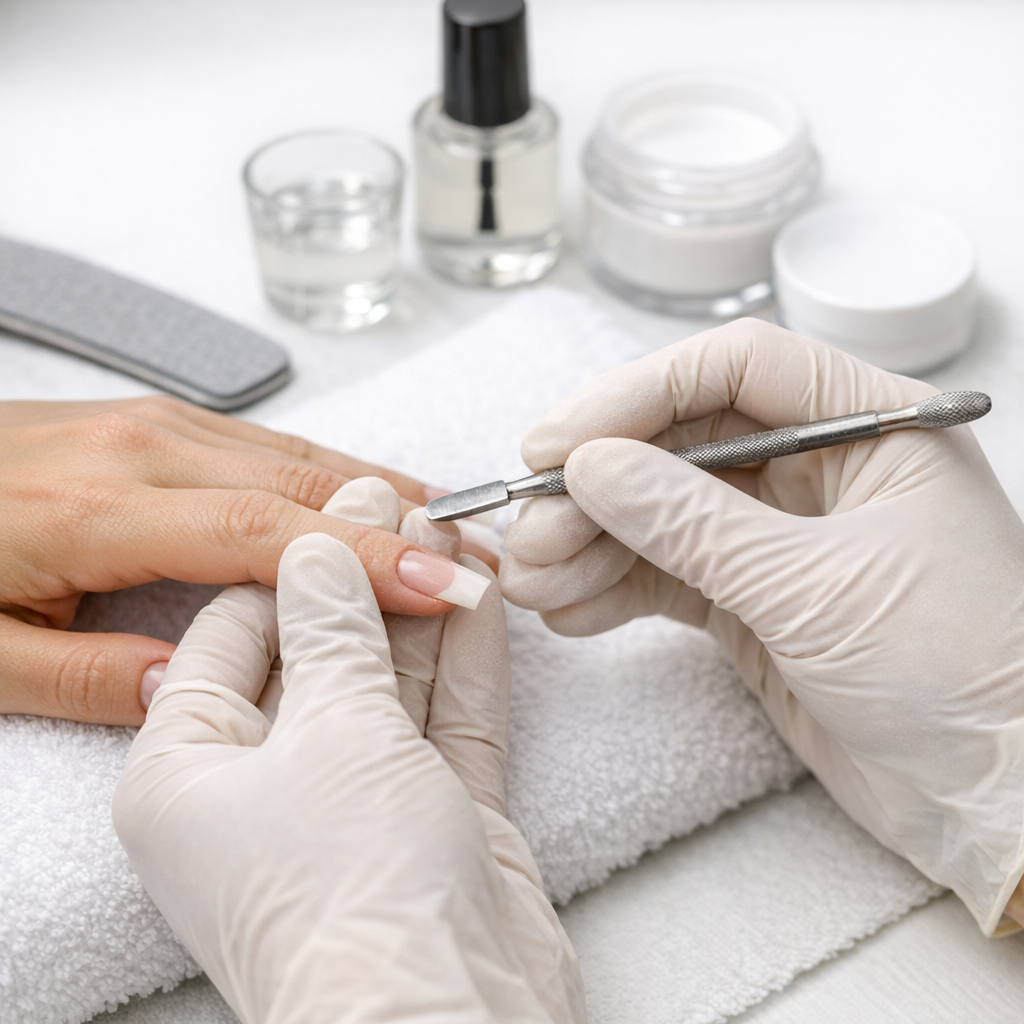
Technicians must thoroughly remove all non-living tissue from the nail surface using a high-quality pusher or e-file bit.
Residual oils or debris act as a barrier, preventing the monomer and polymer from bonding correctly to the keratin.
Advanced Dehydration and Priming
Apply a professional-grade dehydrator to remove moisture and surface oils immediately before the bonding agent.
In humid climates like Florida, using an acid-based or acid-free primer is critical for ensuring chemical adhesion.
Ensure the primer does not touch the surrounding skin to prevent irritation and potential product rejection.
Precision Application Techniques
Managing the liquid-to-powder ratio is the most vital skill for any professional nail technician.
A bead that is too wet will shrink excessively upon curing, causing the edges to pull away and lift.
Conversely, a bead that is too dry will not wet the nail surface sufficiently to create a mechanical bond.
Maintaining the Margin
Always leave a tiny margin—about the thickness of a hair—between the product and the proximal nail fold.
If the acrylic touches the skin, it will inevitably lift as the natural nail grows and the skin moves.
In high-volume California salons, speed must never compromise the precision of the product placement near the sidewalls.
Troubleshooting Common Durability Issues
If a client experiences lifting at the free edge, check for natural nail delamination or improper tip fitting.
Ensure the natural nail is filed to a uniform shape and that the tip is not too narrow for the nail bed.
Check your monomer for contamination; dust or old product bits can weaken the entire structure of the enhancement.
Structural Balance and Apex Placement
A flat nail lacks the structural integrity to withstand daily impact, leading to stress-related lifting at the cuticle.
Place the apex correctly over the stress area to distribute pressure and prevent the enhancement from rocking.
Consistent filing techniques will ensure the side constraints are thin enough to prevent catching on hair or clothing.
