

How to Stop Acrylic Nail Lifting
To stop acrylic nail lifting, technicians must prioritize thorough cuticle removal and complete dehydration of the natural nail plate using professional-grade primers. Maintaining a precise liquid-to-powder ratio and ensuring the product never touches the surrounding skin or eponychium prevents mechanical failure and moisture ingress, ensuring durable, long-lasting nail enhancements.
Mastering Nail Plate Preparation
Thorough Cuticle Removal
Lifting often starts at the proximal nail fold due to invisible tissue left on the plate.
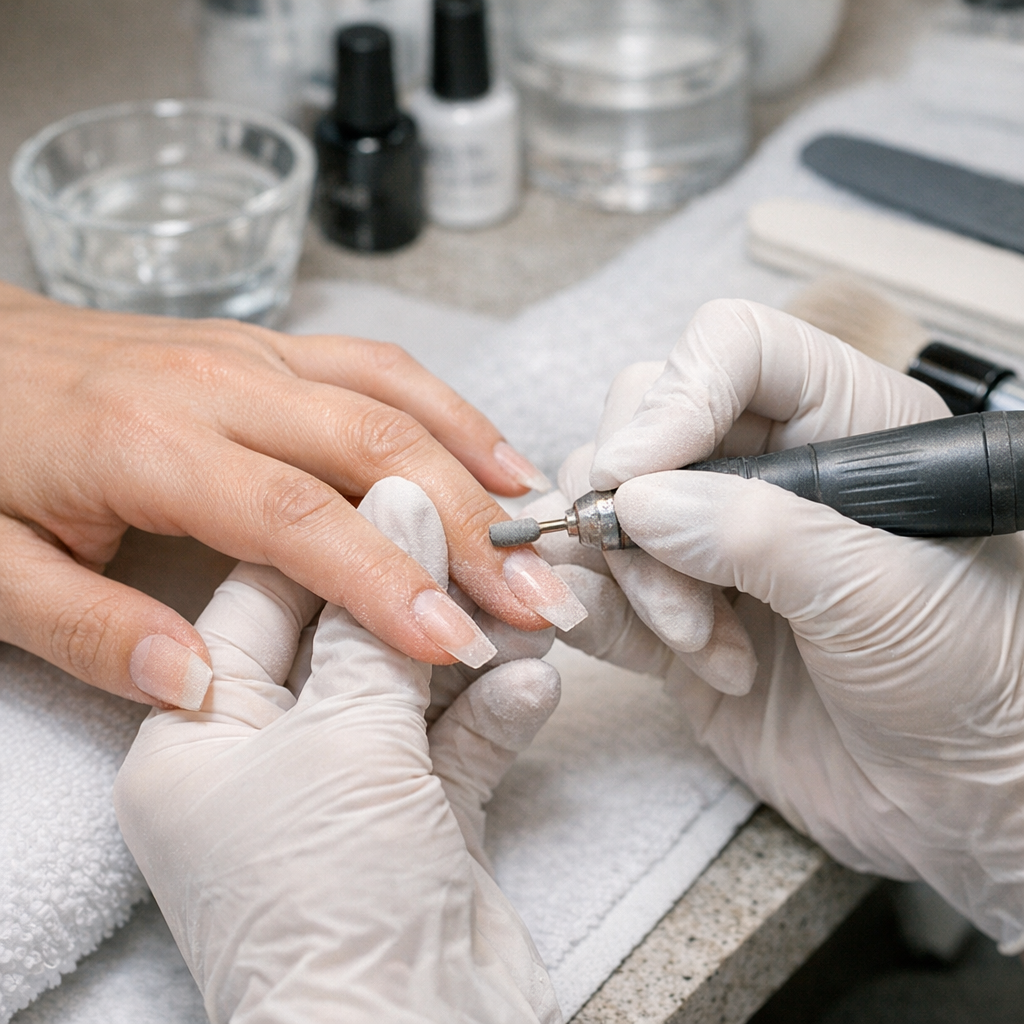
Use a professional e-file bit or a manual pusher to clear all non-living tissue.
Even a microscopic amount of skin can prevent the polymer from bonding to the keratin.
Chemical Dehydration and Ph Balancing
Natural oils and moisture are the primary enemies of acrylic adhesion in busy salons.
Apply a high-quality dehydrator followed by a protein bonder or acid-free primer.
In humid climates like Florida, double-dehydrating may be necessary to ensure a dry surface.
Refining Application Techniques
Correct Liquid-to-Powder Ratio
A bead that is too wet will shrink excessively, pulling away from the sidewalls and causing lifting.
A bead that is too dry will not fully polymerize or penetrate the surface of the nail.
Consistency should be like a pearl that holds its shape without being runny or crumbly.
The Importance of the Margin
Never apply acrylic flush against the skin or the cuticle area.
Leave a tiny margin, roughly the thickness of a hair, between the product and the tissue.
This prevents the acrylic from lifting as the natural nail grows out over time.
Troubleshooting Common Service Errors
Contaminated Tools and Products
Dust in your monomer or a dirty brush can introduce oils that ruin the bond.
Always wipe your brush on a clean, lint-free towel between every single bead application.
Technicians in high-volume California salons often change their dappen dish liquid mid-service.
Incorrect File Grit Selection
Using a grit that is too fine will “shine” the nail rather than create a mechanical bond.
A 180-grit file is standard for gently removing the surface shine without thinning the plate.
Over-filing leads to a flexible nail plate that pulls away from the rigid acrylic structure.
Environmental and Client Factors
Managing Salon Temperature
Acrylic chemistry is highly sensitive to the temperature of your workstation.
In colder New York winters, monomer may set slower, leading to potential flooding of the cuticles.
Maintain a consistent room temperature to ensure the product behaves predictably during the service.
Client Aftercare Education
Advise clients to use high-quality cuticle oil daily to keep the enhancement and natural nail flexible.
Warn them against using their nails as tools, which creates mechanical stress at the free edge.
Consistent maintenance every two to three weeks is essential for preventing structural lifting.
