

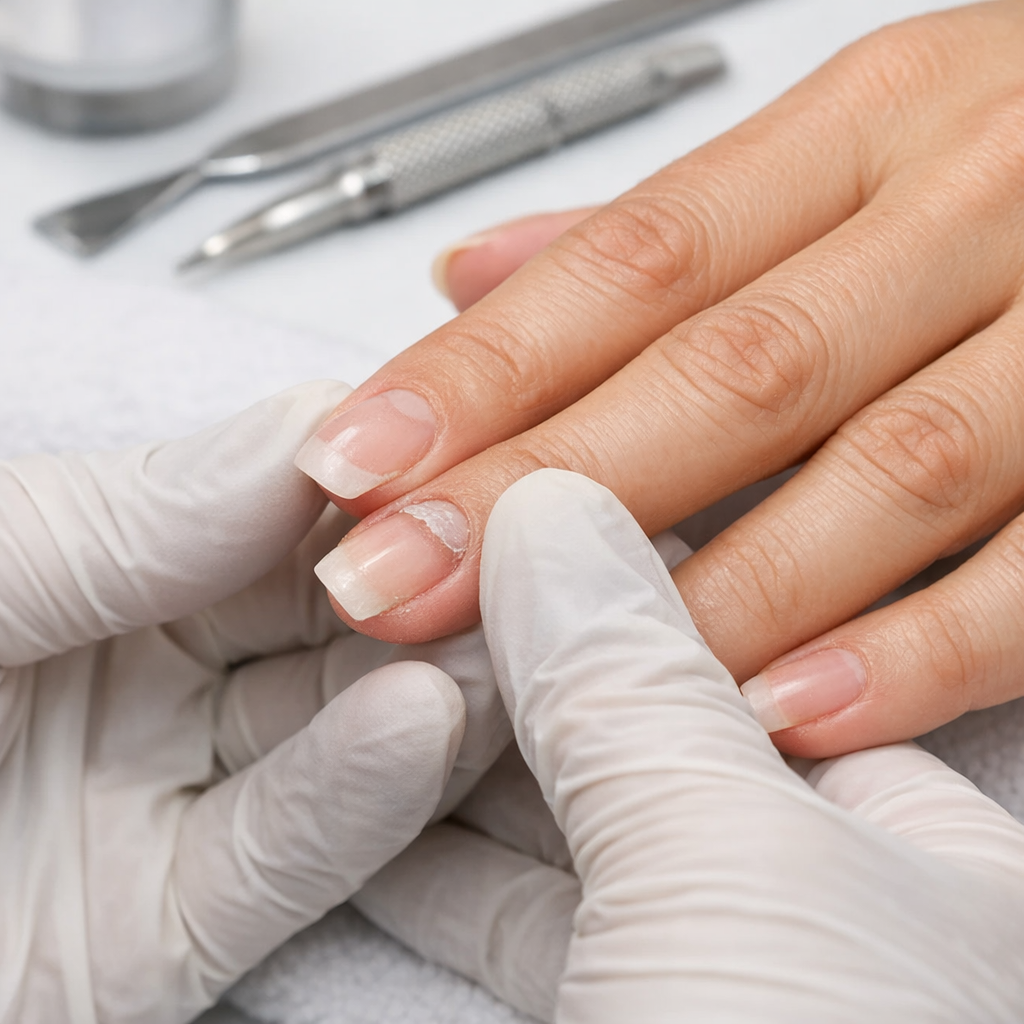
Acrylic Nail Lifting: Professional Troubleshooting Guide
Acrylic nail lifting is the separation of the acrylic enhancement from the natural nail plate, typically caused by inadequate surface preparation or improper chemical ratios. Professional technicians eliminate lifting by thoroughly removing cuticle tissue, using high-quality dehydrators, and maintaining a precise 1/32-inch gap between the product and the proximal nail fold.
The Critical Role of Mechanical Preparation
Mechanical preparation is the foundation of a long-lasting set in any busy New York nail salon.
Technicians must use a 180-grit file to gently remove the shine and open the nail’s keratin scales.
Removing every trace of non-living tissue from the eponychium ensures the polymer bonds directly to the plate.
Optimizing Chemical Dehydration and Priming
Chemical preparation involves using a professional pH-balancing dehydrator followed by a high-quality primer.
In humid climates like Florida, moisture can quickly re-accumulate on the nail surface before the acrylic application.
Apply primer sparingly to the natural nail only, avoiding any contact with the surrounding soft tissue.
Mastering Liquid-to-Powder Ratios
Achieving the correct liquid-to-powder ratio is essential for creating a durable, non-lifting enhancement.
A bead that is too wet will shrink during polymerization, pulling the product away from the nail edges.
Conversely, a dry bead lacks sufficient monomer to create a secure chemical bond with the nail surface.
Environmental Factors in US Nail Salons
The internal climate of a California salon can significantly alter how your acrylic products cure and behave.
High humidity speeds up the set time of many monomers, which may lead to brittle nails and lifting.
Always store your professional liquids and powders in a temperature-controlled environment to ensure consistent results.
Common Application Mistakes and Solutions
Product touching the skin is the primary cause of lifting within the first forty-eight hours of service.
Ensure you taper the acrylic thinly at the cuticle area to prevent a heavy ledge that catches on hair.
Always check the sidewalls for any flooded product before the enhancement fully cures to ensure a clean seal.
Troubleshooting Client Maintenance and Habits
Lifting can sometimes result from client habits rather than technician errors during the initial application.
Educate clients on the importance of using cuticle oil daily to keep the enhancement flexible and resilient.
Advise them against using their nails as tools, which puts mechanical stress on the bond and causes cracking.
