
Learn how to optimize your nail salon workflow to improve service consistency, reduce downtime, and manage staff schedules for better profitability.
Nail Salon Workflow Optimization
Nail salon workflow optimization is the process of structuring service sequences, booth assignments, and sanitation protocols to maximize daily operational efficiency. By streamlining the movement of nail technicians and clients, salon owners ensure consistent service delivery, reduce wasted time between appointments, and maintain high standards of professional organization.
Establishing Standard Operating Procedures for Nail Technicians
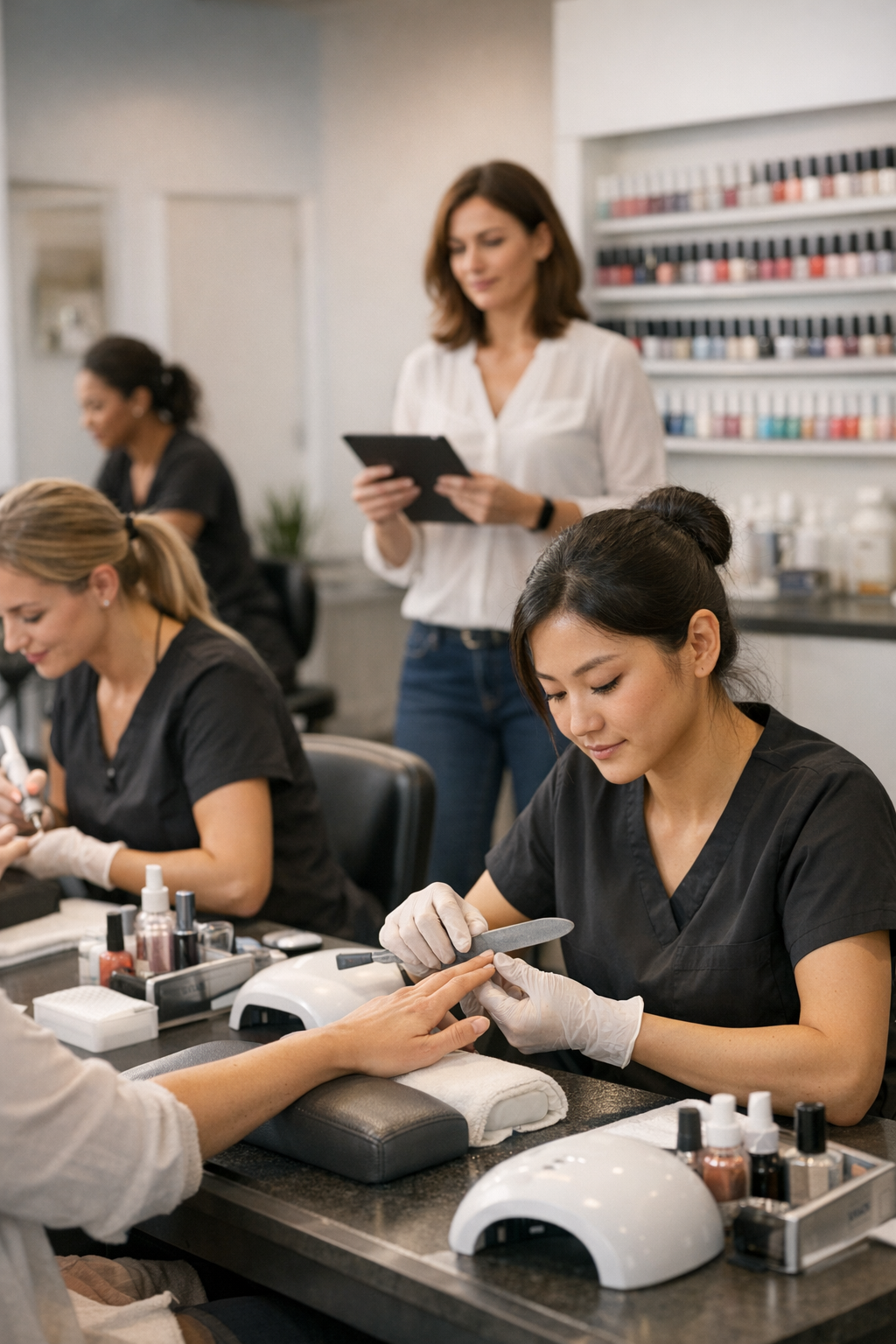
Consistency in a nail salon starts with standardized station setups for every technician.
Uniformity ensures that any technician can navigate any station without searching for essential liquids or files.
This organizational system reduces the transition time between client appointments in busy New York salons.
Station Preparation and Sanitation Cycles
Managing the time between nail services is critical for maintaining strict sanitation standards.
Each technician must follow a timed workflow for disinfecting implements and cleaning the manicure table.
Clear operational checklists help staff complete these tasks without delaying the next scheduled service.
Managing Staff Schedules and Service Durations
Accurate time blocking is the foundation of a functional nail salon schedule.
Owners should set specific durations for services such as full sets, gel fills, and removals.
Refining these time slots prevents bottlenecks that often occur during peak hours in Dallas salons.
Balancing Walk-ins and Appointments
Operational control requires a clear system for handling unexpected walk-in clients.
A designated staff coordinator should assess technician availability based on real-time service progress.
Prioritizing appointments while filtering walk-ins into open gaps keeps the salon floor moving steadily.
Inventory Systems and Back-Bar Management
Efficient nail salons maintain a strict inventory system for all professional supplies.
Tracking the usage of monomers, polymers, and gels prevents service interruptions due to stock shortages.
Designating a specific day for inventory auditing ensures the salon remains fully operational at all times.
Supply Storage and Accessibility
Centralized storage for nail products allows technicians to restock their stations quickly.
Organizing back-bar supplies by service type reduces the physical steps a technician takes during the day.
This layout logic improves the overall workflow and increases the number of services performed daily.
Daily Management Decisions and Staff Coordination
Active management during operating hours is essential for resolving immediate workflow conflicts.
Morning huddles help technicians understand their specific assignments and any expected high-volume periods.
Strong leadership ensures the nail salon functions as a cohesive unit rather than independent contractors.
