
Nail Salon Workflow Management
Nail salon workflow management is the strategic organization of technician assignments and service stages to ensure maximum floor productivity. This system utilizes precise scheduling protocols and standardized station transitions to maintain consistent service quality, minimize client wait times, and uphold professional sanitation requirements throughout the business day.
Standardizing the Service Cycle
Efficient workflow begins with a standardized service cycle that every nail technician follows. This includes defined time blocks for nail preparation, application, and finishing work.
By establishing these timeframes, salon owners in busy hubs like Florida can predict chair turnover with higher accuracy. This consistency prevents bottlenecking at the drying stations.
Operational control is maintained when every staff member understands the transition protocols between different nail services. This minimizes confusion during peak business hours.
Technician Rotation Systems
Implementing a fair rotation system ensures that every technician remains productive without becoming overwhelmed. This system balances complex enhancements with standard natural nail services.
Proper rotation also allows for mandatory sanitation breaks between clients. These gaps are essential for resetting workstations and preparing professional implements for the next service.
Front Desk and Floor Coordination
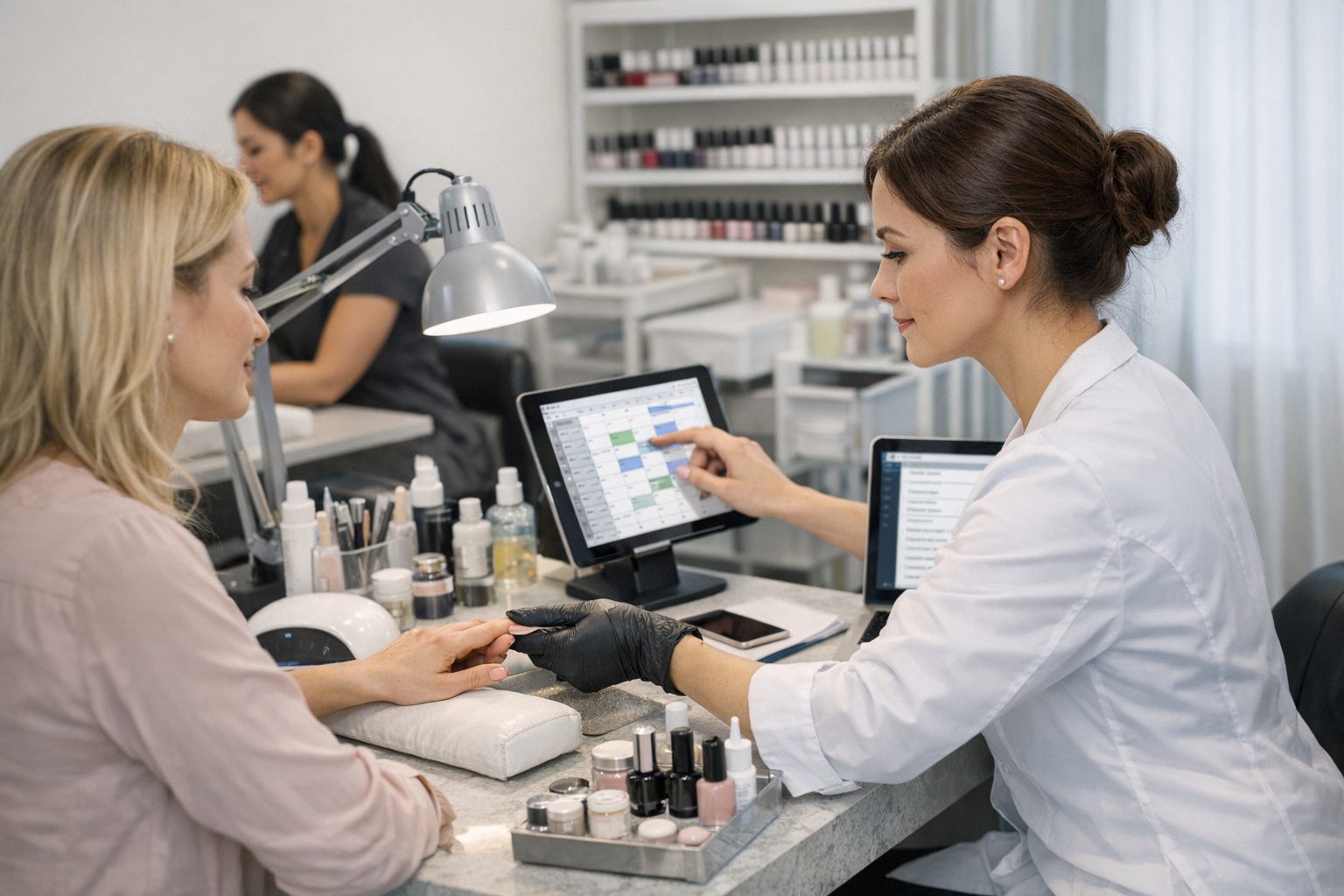
The relationship between the front desk and the nail floor is the engine of salon operations. Clear communication regarding walk-ins and late arrivals is vital for maintaining the schedule.
Floor managers should monitor service progress to adjust assignments in real-time. This active management prevents gaps in the schedule that lead to lost revenue.
In high-traffic California nail salons, dedicated floor coordinators often manage the movement of clients from the waiting area to the manicure desks or pedicure thrones.
Managing Service Transitions
Transitions are the most common point of failure in nail salon operations. Establishing a protocol for moving clients between stations reduces wasted time.
Standardized cleanup procedures must occur immediately after a service concludes. This ensures the station is always ready for the next technician and client pairing.
Operational Quality Control
Consistency in nail services is achieved through strict operational oversight. Owners must conduct regular checks to ensure technicians adhere to the established workflow.
Staff meetings should focus on operational hurdles and bottlenecks identified during the week. This collaborative approach helps refine the system based on actual floor experience.
Standardized workflows also simplify the training process for new hires. When the system is clear, new technicians integrate into the salon culture much faster.
Supply and Inventory Integration
Workflow management includes the seamless integration of supply replenishment. Technicians should never leave their stations to search for liquid, powder, or professional files.
Daily operational checklists should include station stocking protocols performed before the doors open. This preparation supports a continuous flow throughout the workday.
Well-stocked stations allow technicians to focus entirely on the client, improving both the service speed and the professional environment of the nail salon.
