
Implementing Standard Operating Procedures for Nail Salons
Professional nail salon ownership requires more than technical artistry.
Establishing standard operating procedures ensures that every nail service remains consistent and high-quality.
Consistent systems help nail technicians understand their roles and daily responsibilities.
Whether operating in California or smaller markets, systems drive long-term profitability.
Operational clarity allows the nail salon owner to step back from the chair.
A structured environment reduces errors and improves the overall nail client experience.
Developing a Seamless Nail Salon Workflow
A clear workflow begins the moment a client enters the nail salon.
Reception staff or the lead nail technician should follow a specific greeting protocol.
This includes verifying the nail service requested and updating client profile cards.
Client Intake and Station Preparation
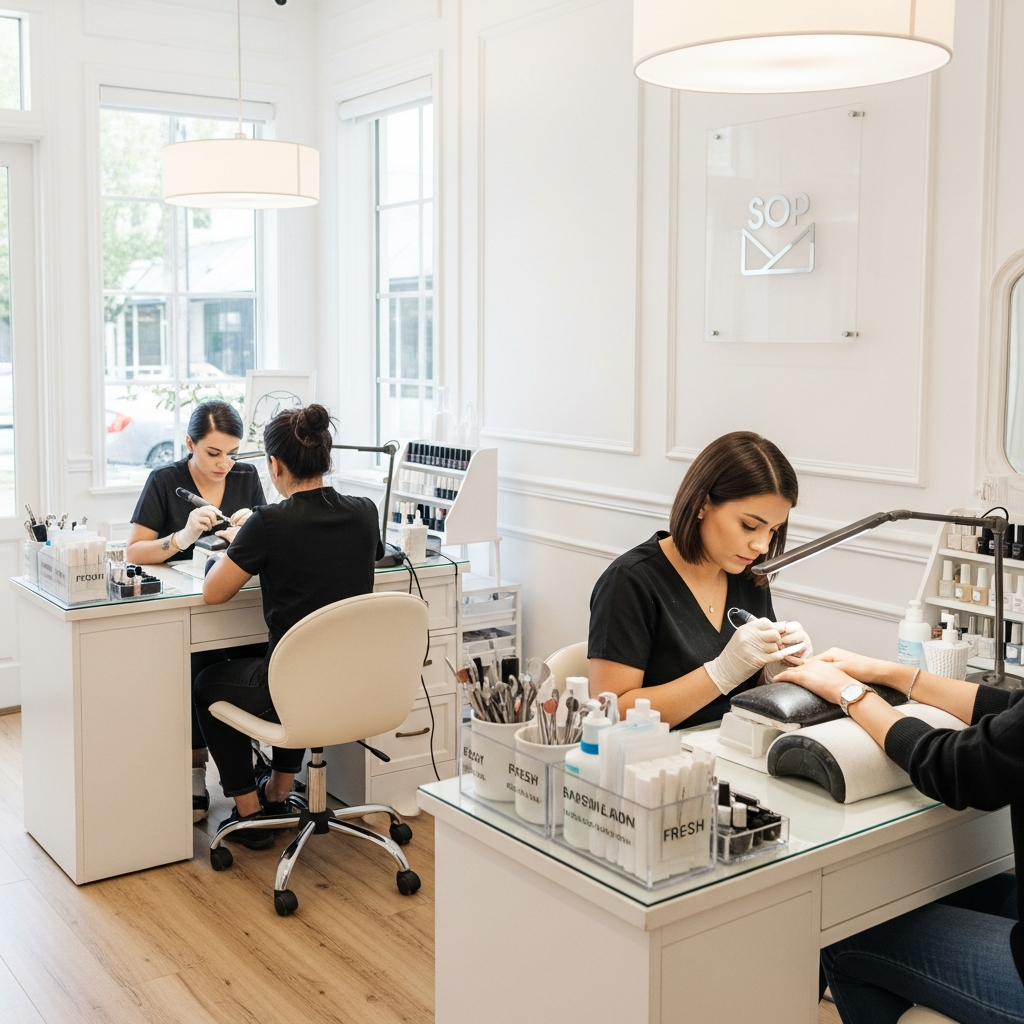
The nail technician must prepare the workstation before the client is seated.
All nail files, buffers, and implements must be visible and properly sanitized.
Following a set preparation list prevents delays during the actual nail application.
Standardized station setups ensure that every nail technician has access to required liquids and powders.
Consistency in station layout helps staff transition between different nail tables efficiently.
This operational control minimizes downtime between back-to-back nail appointments.
Managing Nail Technician Staffing and Scheduling
Effective scheduling is the backbone of successful nail salon operations.
Owners must balance the number of nail technicians with peak demand hours.
In high-traffic areas like Florida, managing walk-ins alongside pre-booked nail services is vital.
Staff Coordination and Shift Handoffs
Shift changes in a nail salon require clear communication and organized handoffs.
Outgoing nail technicians should ensure their stations are stocked for the next person.
A daily checklist helps maintain accountability for cleaning and restocking nail supplies.
Weekly staff meetings focus on operational challenges and service standards.
Reviewing the nail salon’s performance metrics helps the team align with growth goals.
Clear communication prevents misunderstandings regarding commission or hourly nail service rates.
Daily Operational Controls and Safety Logs
Maintaining a clean and safe nail salon environment is a legal and professional requirement.
Daily sanitation logs must be updated every time a pedicure basin or nail station is cleaned.
These records protect the nail salon during state board inspections.
Inventory Management Systems
Monitoring the use of nail monomers, polymers, and gels prevents stockouts.
A manual inventory log should be updated weekly to track professional nail product usage.
This data helps nail salon owners make informed purchasing decisions and control costs.
Standardized mixing ratios for nail chemicals also help in managing product waste.
Educating nail technicians on proper product measurement ensures consistent nail durability.
Controlled inventory management leads to more predictable monthly overhead for the nail business.
Ensuring Nail Service Consistency
Clients return to a nail salon because they expect a specific result every time.
Standardizing the steps for a basic manicure or a full set of nails ensures this outcome.
Every nail technician should follow the same grit sequence and cuticle prep method.
Quality control checks by the nail salon manager can identify areas for improvement.
Regularly reviewing the finish and shape of the nails produced maintains the salon’s reputation.
Operational systems turn a group of individual nail techs into a cohesive professional team.
