
Nail Salon Operations Manual
A nail salon operations manual is a comprehensive document that defines standard procedures, service workflows, and staff expectations to ensure business consistency. It outlines specific protocols for appointment scheduling, client intake, station setup, and sanitation cycles, providing a blueprint for nail salon owners to manage daily activities efficiently and maintain professional standards.
Developing Standard Operating Procedures for Nail Salons
Success in the nail industry requires more than technical skill; it demands structured systems.
An operations manual serves as the backbone of your business, ensuring every technician follows the same steps.
This consistency builds trust with clients and simplifies the training process for new hires.
Operational manuals should cover every aspect of the daily routine.
From opening the entrance to reconciling the register at night, every task needs a written protocol.
This reduces confusion and allows the owner to step away without the business operations faltering.
Streamlining Client Flow and Front Desk Systems
The front desk is the engine of nail salon operations.
Establish clear rules for answering phones, handling walk-ins, and managing the waiting area.
Define the check-in process to ensure every client is greeted and assigned to a technician promptly.
Effective scheduling systems prevent overbooking and technician burnout.
Your manual should specify time blocks for various services like full sets, fills, or gel manicures.
This ensures that the salon floor remains organized and appointments stay on track throughout the day.
Technical Workflow and Station Maintenance
Uniformity in service delivery is vital for brand reputation in the United States market.
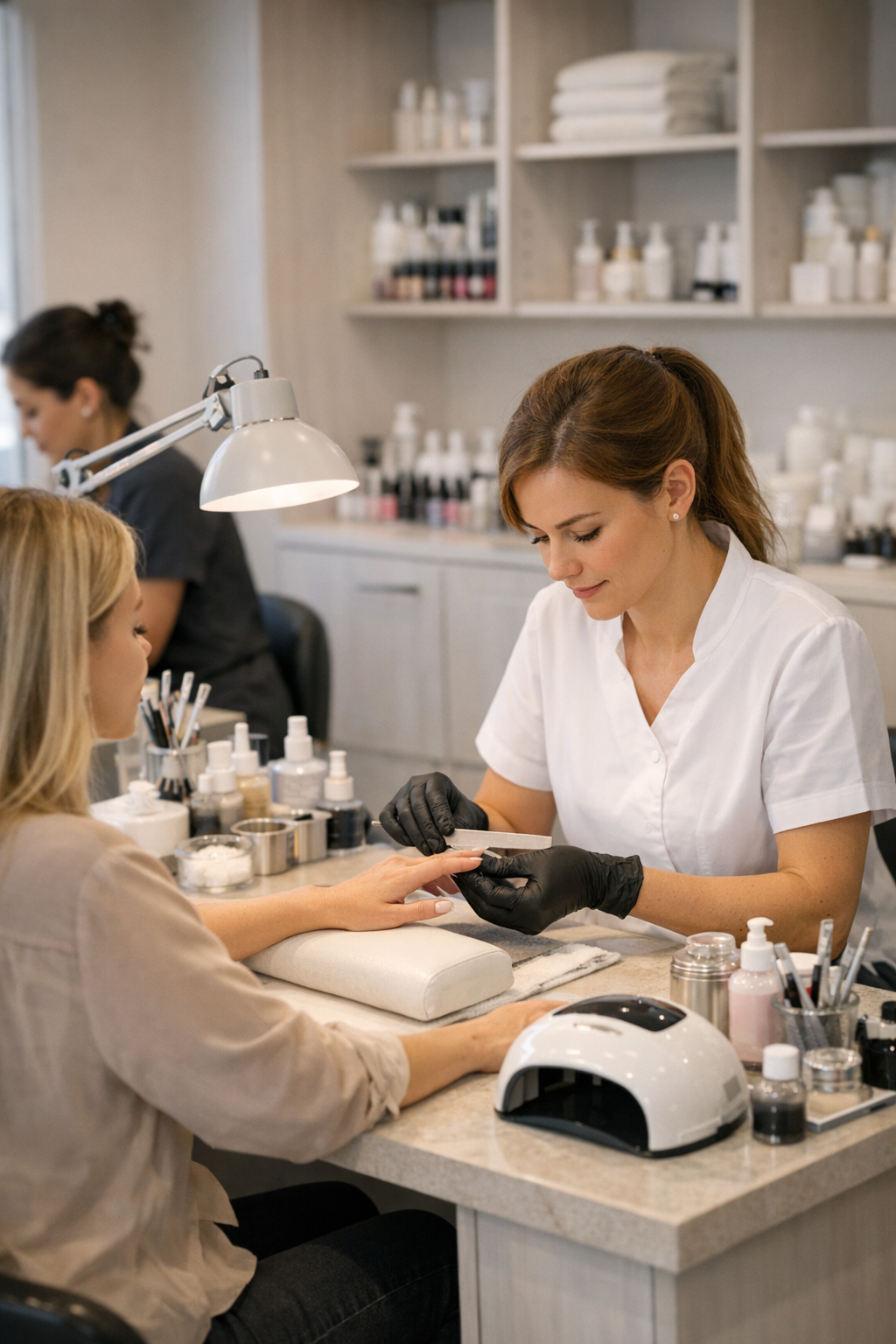
Detail the exact steps for station preparation before a client arrives.
Specify where tools, towels, and nail liquids should be placed to optimize the technician’s movement.
Include a rigorous sanitation schedule within the daily workflow.
Nail technicians must know exactly when to clean foot baths and how to process used implements.
Clear operational guidelines ensure that safety standards are met between every single appointment.
Staff Coordination and Operational Standards in Florida
Managing a team in high-traffic markets like Florida requires clear communication of expectations.
The operations manual should define roles and responsibilities for all staff members.
This includes who handles laundry, who stocks the nail polish racks, and who monitors supply levels.
Performance standards must be measurable and documented for the whole team.
Outline the professional conduct expected on the salon floor and in the breakroom.
Consistent enforcement of these rules creates a professional environment that attracts top-tier nail talent.
Inventory Controls and Supply Management
Inventory is a significant overhead cost for any nail business in Texas.
Establish a system for tracking the usage of monomers, polymers, gels, and disposables.
A dedicated section in your manual should explain the reordering process to prevent stockouts.
Designate specific days for inventory counts and delivery inspections.
This operational control prevents waste and ensures technicians always have the necessary products.
Proper supply management directly impacts the profitability of every service performed.
Maintaining Service Consistency Through Systems
A well-documented manual ensures that a manicure in the morning is identical to one in the evening.
Regularly review and update your operational procedures as the business grows.
This living document adapts to new service offerings and changing industry standards.
Training staff on the manual is as important as writing the document itself.
Hold monthly meetings to refresh the team on core workflows and address operational bottlenecks.
Systematized nail salon operations allow owners to focus on growth rather than daily fires.
