
How to Prevent Gel Polish Lifting
To prevent gel polish lifting, nail technicians must perform thorough nail plate preparation by removing surface oils and non-living tissue. Applying thin, even layers while avoiding the surrounding skin and properly capping the free edge ensures a secure bond. Using high-quality professional dehydrators and primers further enhances product adhesion for three-week durability.
Critical Nail Plate Preparation Steps
The most common cause of premature lifting is improper preparation of the natural nail.
Technicians must ensure the nail plate is completely free of pterygium and dead skin cells.
In busy New York salons, rushing this step often results in service breakdown within days.
Mechanical and Chemical Cleansing
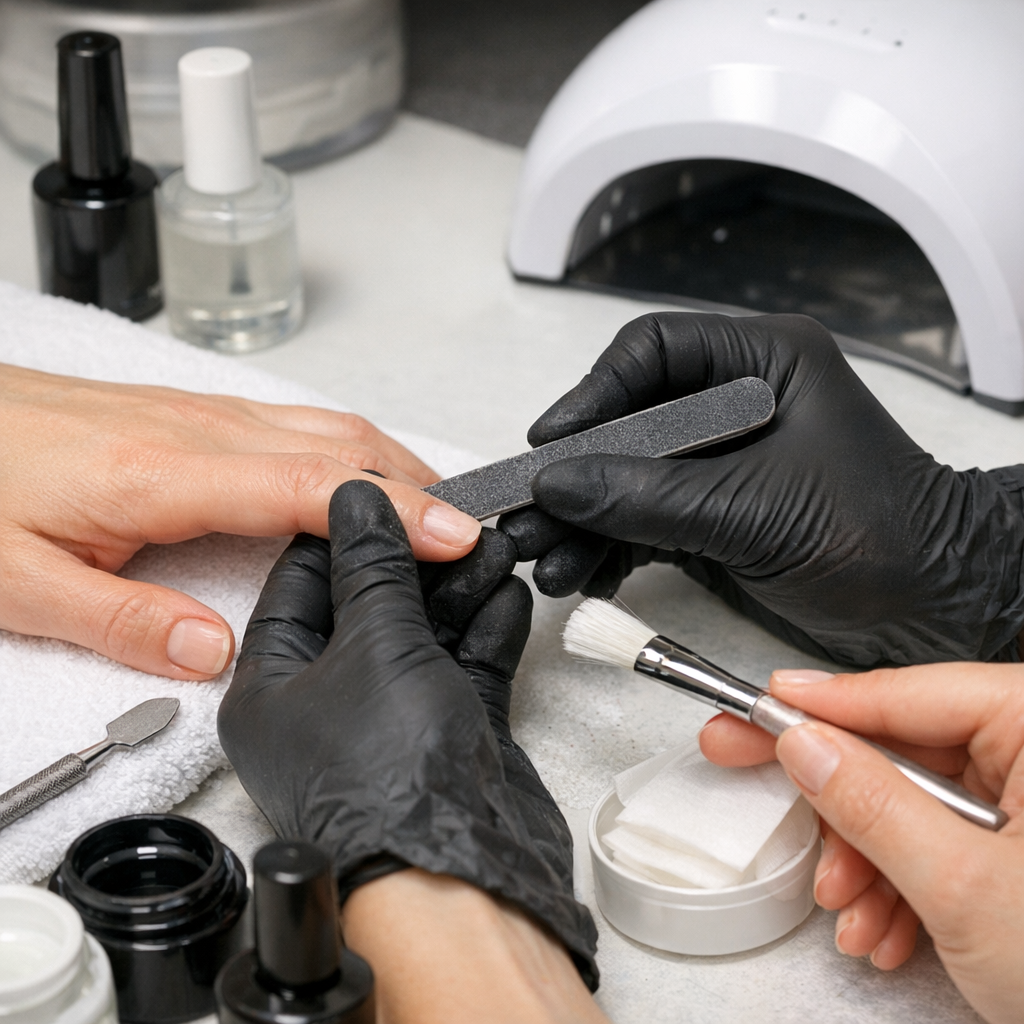
Start by gently pushing back the eponychium and using a fine-grit buffer to remove the shine.
Use a high-quality lint-free wipe with 90% isopropyl alcohol to remove all filing dust and debris.
Residual dust acts as a barrier, preventing the base coat from fusing with the keratin layers.
Dehydration and pH Balancing
Applying a professional-grade dehydrator is essential for removing deep-seated moisture and oils.
In humid climates like Florida, nail technicians often find that a secondary application of primer is necessary.
Acid-free primers create a double-sided adhesive bond that significantly improves gel longevity on oily nail plates.
Advanced Application Techniques for Durability
Even with perfect preparation, poor application techniques can lead to immediate product failure.
Product pooling in the sidewalls or touching the skin causes a ledge that eventually peels away.
Maintaining a tiny gap between the product and the proximal nail fold is a best practice.
Capping the Free Edge
Every layer, including the base coat, color, and top seal, must be swiped across the free edge.
This technique, known as capping, encases the natural nail and prevents water from entering underneath.
Properly capped nails are much more resistant to the daily wear and tear seen in California salon environments.
Managing Product Volume
Applying gel polish in layers that are too thick prevents the LED lamp from fully curing the center.
Under-cured gel remains soft and flexible, which inevitably leads to lifting and potential allergic reactions.
Three thin coats are always superior to two thick coats for achieving a professional, bubble-free finish.
Troubleshooting Common Durability Issues
If lifting occurs at the free edge, it usually indicates the client is using their nails as tools.
However, if lifting starts at the cuticle area, it points directly to prep errors or over-filing.
Using a professional 180-grit file is standard for shaping without causing unnecessary thinning of the plate.
Lamp Maintenance and Curing Times
Always verify that your curing lamp is compatible with the specific gel brand you are using.
Bulbs lose their intensity over time, leading to incomplete polymerization and frequent lifting issues.
Regularly cleaning the interior reflective surfaces of the lamp ensures light reaches all angles of the nail.
Client Aftercare Education
Educate clients on the importance of using cuticle oil daily to keep the natural nail flexible.
Brittle nails tend to pull away from the rigid gel coating, causing mechanical lifting.
Advise clients to wear gloves when using harsh household chemicals to protect the integrity of the seal.
