

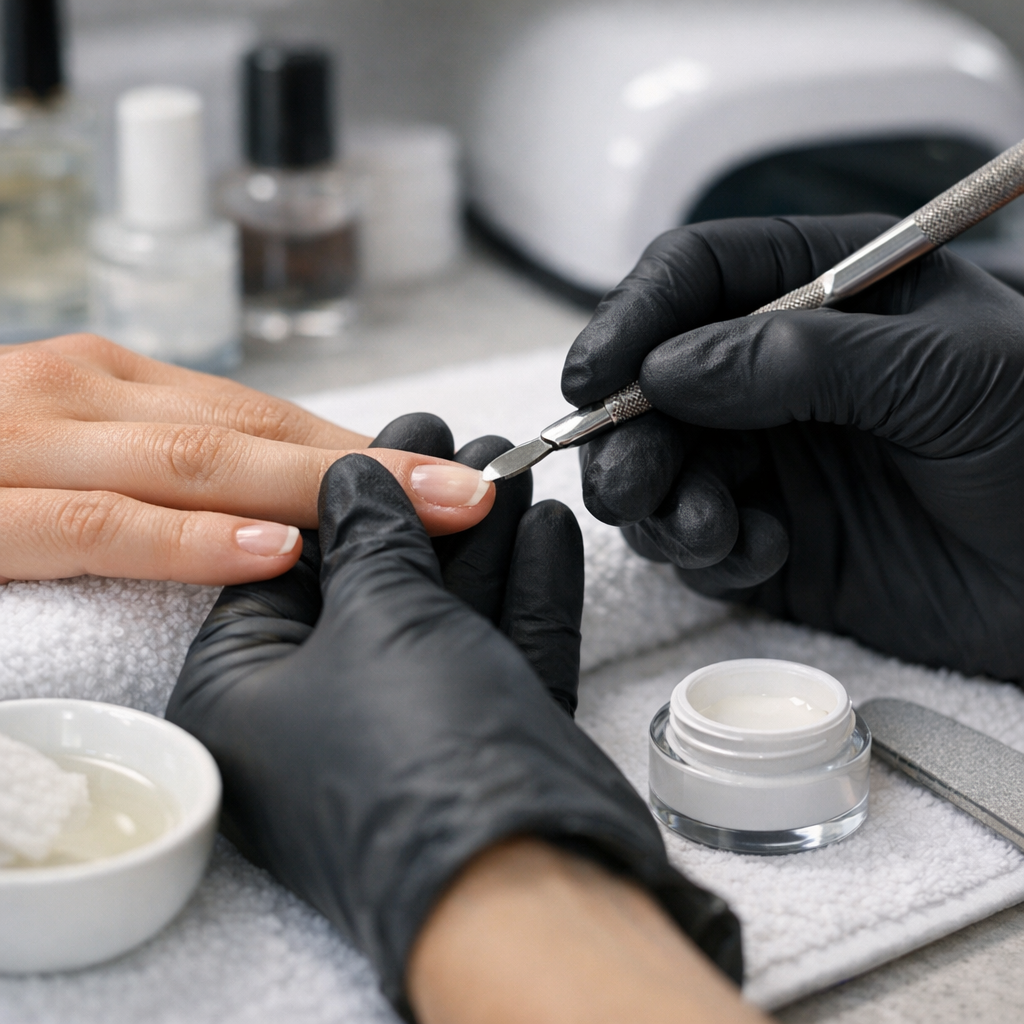
How to Prevent Gel Polish Lifting at the Cuticle
Gel polish lifting at the cuticle is a common durability issue caused by improper nail plate preparation or product contact with the skin. Preventing this requires thorough removal of the true cuticle, proper dehydration, and leaving a small margin between the gel and the eponychium to ensure a permanent bond.
Common Causes of Lifting Near the Cuticle Area
The most frequent cause of premature lifting is the presence of the “true cuticle” on the nail plate.
This invisible layer of non-living tissue prevents the base coat from adhering directly to the keratin.
When the gel bonds to skin or debris instead of the nail, it inevitably peels away.
Product flooding is another major mistake in busy salons from New York to Los Angeles.
If the gel polish touches the proximal nail fold or lateral sidewalls, it creates a bridge.
As the natural nail grows out, this bridge breaks, allowing moisture and oils to seep underneath.
Improper dehydration also leads to service failure within the first few days.
Natural oils and moisture are the enemies of gel adhesion and must be temporarily removed.
Technicians often skip the corners of the cuticle area, leaving oil pockets that trigger lifting.
Best Practices for Cuticle Preparation
Thorough Mechanical Prep
Use a high-quality pusher to gently retract the eponychium and expose the nail plate surface.
A diamond bit in an electric file is highly effective for clearing away stubborn dry tissue.
Ensure the tool remains flat to avoid thinning the natural nail or creating “rings of fire.”
Chemical Dehydration and Priming
After mechanical cleaning, scrub the nail plate with a lint-free wipe soaked in 99% isopropyl alcohol.
Focus specifically on the tight crevices near the cuticle where oils tend to hide.
Apply a pH-balancing dehydrator and a compatible primer if the client has oily nail plates.
Application Techniques to Ensure Durability
In high-volume salons in Houston, speed often leads to heavy-handed application.
Apply the base coat in very thin layers, pushing the brush toward the cuticle without touching it.
Leave a tiny “hairline” gap between the color and the skin to prevent the product from running.
Always check the sidewalls and the cuticle line before placing the hand into the LED lamp.
If any product has touched the skin, use a clean brush dipped in cleanser to remove it.
Curing flooded product guarantees that the service will fail and may lead to skin sensitivities.
Troubleshooting Client Factors
Ask clients about their post-service habits, such as frequent exposure to harsh cleaning chemicals.
Recommend the daily use of high-quality cuticle oil to keep the surrounding skin flexible.
Supple skin is less likely to pull away from the gel, reducing the risk of mechanical lifting.
Professional nail technicians must also consider the health of the client’s natural nails.
Nails that are overly thin or damaged may require a structured manicure or a builder gel base.
Providing the correct reinforcement ensures the gel polish remains stable at the stress points.
