

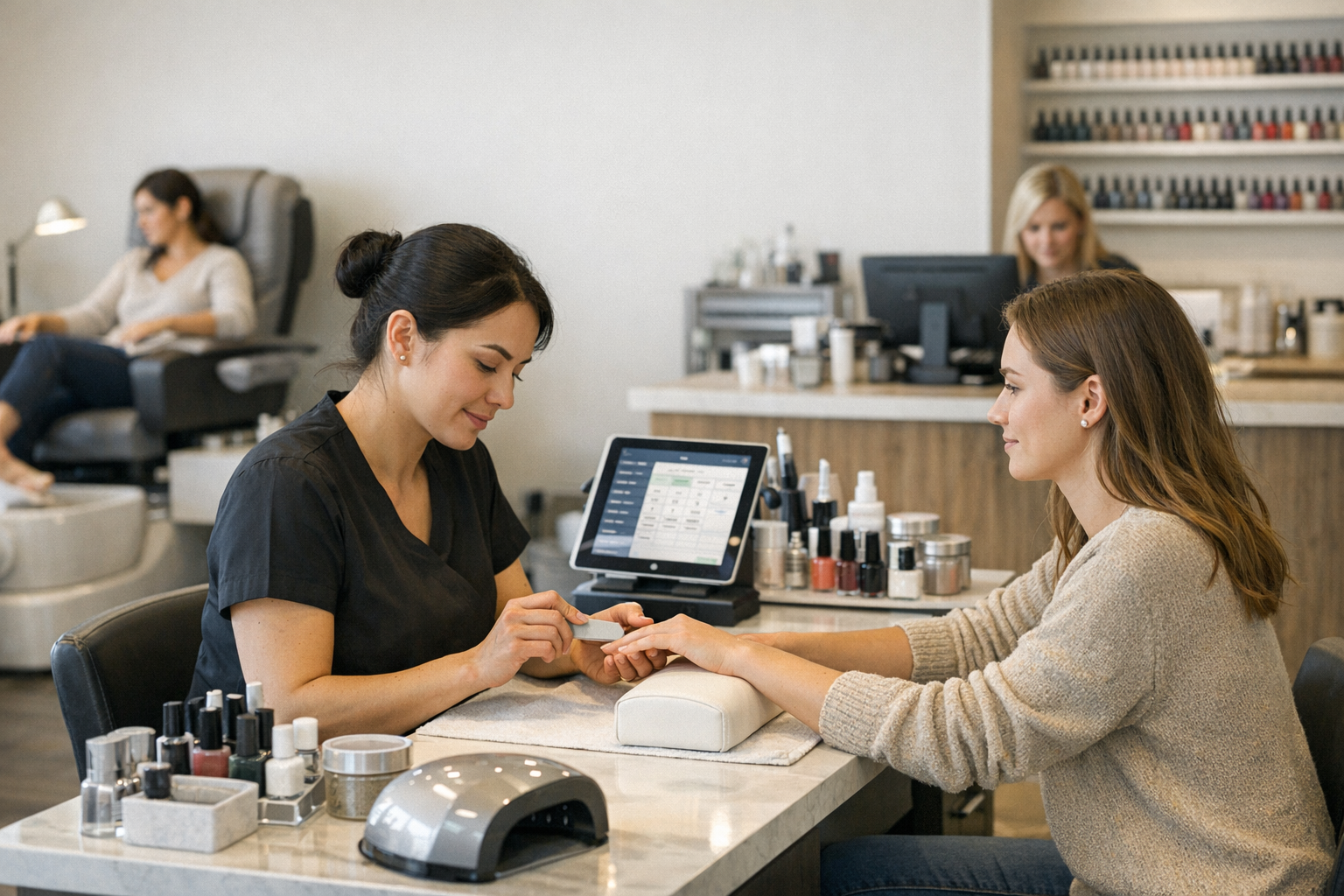
Nail Salon Workflow Management
Nail salon workflow management is the strategic coordination of technician movements, service sequences, and station transitions to maximize daily productivity. Effective management involves standardizing the hand-off between manicure and pedicure stations while ensuring that professional sanitation requirements are integrated into the scheduling system without disrupting the client experience.
Optimizing Technician Station Rotations
Efficient movement between manicure tables and pedicure thrones is essential for maintaining a steady pace.
Nail salons in New York City often utilize a zoned approach where technicians remain in specific areas
to minimize cross-floor traffic and reduce downtime between clients.
Management should establish a clear signaling system for when a client is ready to move.
This ensures that the next station is fully prepared with fresh linens and sanitized equipment
before the technician and client arrive at the new location.
Synchronizing Manicure and Pedicure Transitions
Transitions should be timed to allow for thorough sanitation of the pedicure basin.
Establishing a 10-minute buffer within the workflow ensures that technicians in California
adhere to strict state board sanitation requirements without falling behind schedule.
Standardizing Service Timing for Consistency
Every service on the menu must have a strictly defined duration to prevent scheduling overlaps.
Operational control is maintained when every technician follows the same timeframe for
shaping, cuticle work, and lacquer application across all appointments.
Consistent timing allows the floor manager to predict gaps in the schedule accurately.
In high-volume operations in Texas, this predictability is the foundation for
accepting walk-in clients without impacting existing appointments.
Managing Staff Shifts and Floor Coverage
Staggering staff start times ensures that the salon is always adequately staffed during peak hours.
Morning shifts should focus on preparation and supply replenishment, while mid-day
rotations prioritize maximum station occupancy to handle the lunch-hour rush.
Inventory Control and Supply Station Organization
A well-organized back-bar system prevents technicians from leaving their stations during a service.
Centralized supply hubs should be stocked with professional liquids, powders, and gels,
allowing for quick replenishment between appointments without disrupting the salon flow.
Daily operational audits of these stations help identify supply shortages before they occur.
Maintaining a lean inventory system ensures that professional products are used within
their shelf life while reducing the overhead costs associated with overstocking.
Professional Sanitation Cycles in the Workflow
Sanitation is not an interruption to the workflow but a core component of the system.
By integrating disinfection cycles into the technician’s daily checklist,
salon owners ensure that safety standards are met consistently across every shift.
