

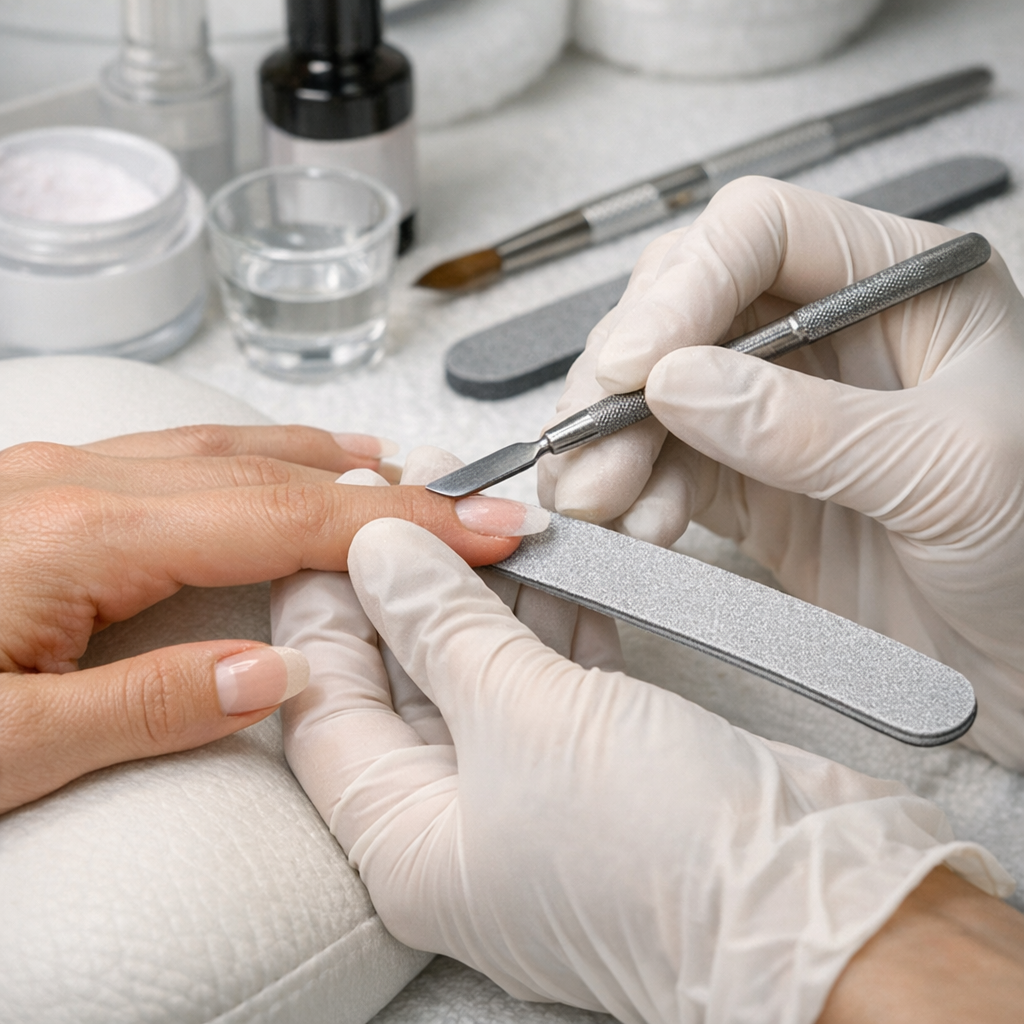
Preventing Acrylic Nail Lifting: Professional Solutions
Preventing acrylic nail lifting involves meticulous natural nail plate preparation, ensuring the removal of all surface oils and non-living tissue. Professional nail technicians must use high-quality dehydrators and primers while maintaining a precise liquid-to-powder ratio during application. Keeping the product away from the eponychium and sidewalls is vital for long-lasting enhancement durability.
Essential Nail Plate Preparation Techniques
The primary cause of lifting is inadequate preparation of the natural nail plate before product application.
Technicians in high-volume salons in New York must ensure the complete removal of the pterygium.
Use a professional-grade cuticle pusher and a fine-grit sanding band to remove the shine gently.
Chemical Dehydration and Priming
After mechanical prep, applying a pH-balancing dehydrator is a mandatory step for every client.
In humid climates like Florida, nail moisture levels can fluctuate, making professional primers even more critical.
Apply an acid-free or acid-based primer according to the manufacturer’s instructions to create a superior bond.
Mastering Liquid-to-Powder Ratios
An incorrect monomer-to-polymer ratio often leads to brittle enhancements or premature lifting.
A bead that is too wet will shrink significantly during polymerization, pulling away from the edges.
A bead that is too dry will not have enough plasticizer to bond effectively to the nail plate.
Environmental Impacts on Curing
Be aware that salon temperature affects how quickly the acrylic sets during the service.
Technicians in California often adjust their working speed based on seasonal indoor climate changes.
Consistency in your bead work ensures the enhancement remains flexible and resistant to service breakdown.
Common Application Mistakes and Fixes
Flooding the cuticle area is one of the most frequent errors made by junior nail technicians.
When acrylic touches the skin, it creates a ledge that allows water and oils to seep under the product.
Always leave a tiny margin—the thickness of a business card—between the product and the eponychium.
Proper Apex Placement for Support
If the enhancement lacks a proper apex, the stress point of the nail will eventually crack or lift.
Structural integrity depends on placing the bulk of the product over the natural nail’s stress zone.
This distribution of weight prevents the free edge from acting as a lever that prying the acrylic loose.
Troubleshooting Persistent Lifting Issues
If a client experiences lifting despite perfect application, evaluate their daily activities and health.
Chronic lifters in busy cities like Chicago may require a different monomer system or shorter lengths.
Documenting these variables helps in adjusting the service for better durability during the next appointment.
