

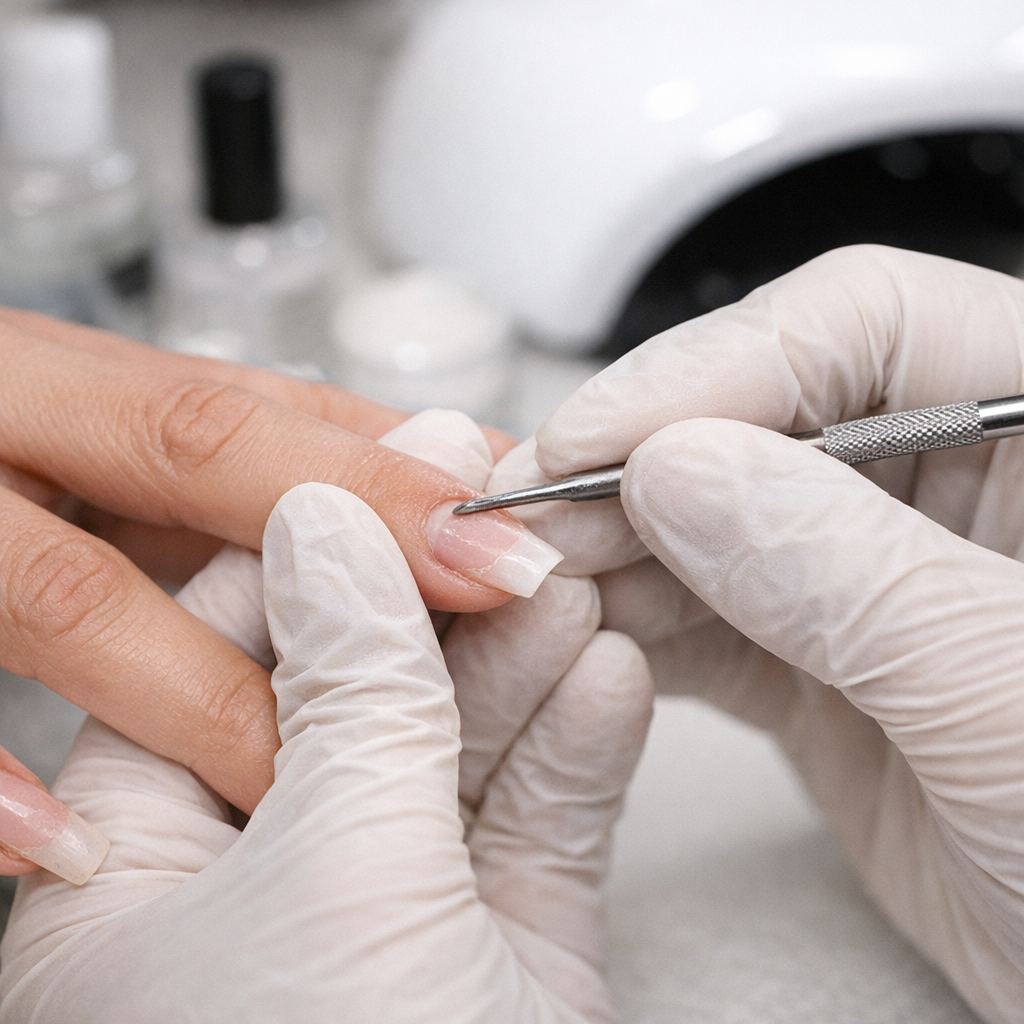
Acrylic Nail Lifting Prevention and Troubleshooting
Acrylic nail lifting prevention involves meticulous nail plate preparation, including cuticle removal and dehydration, coupled with precise product application. By maintaining a small margin between the product and the proximal nail fold, technicians prevent moisture ingress. These best practices ensure a long-lasting bond and reduce common service failures in professional salons.
Proper Nail Plate Preparation Techniques
Nail lifting occurs when the enhancement separates from the natural nail plate. This issue often stems from improper cleaning or product touching the skin during application.
Professionals in states like California must account for high client volume and varying humidity levels. Consistent prep routines are essential for service longevity and client safety.
Start by removing the pterygium from the nail surface using a professional e-file. Ensure the nail is completely free of oils and dust before applying any bonding agents.
Effective Dehydration and Priming
Use a high-quality dehydrator followed by a protein-rich primer to create a receptive surface. This step is critical in high-humidity areas like Houston to ensure maximum adhesion.
Avoid touching the nail plate with your fingers after the dehydration step. Even a small amount of skin oil can compromise the chemical bond of the acrylic.
Mechanical Buffing Standards
Gently remove the shine from the natural nail using a 180-grit file. Excessive thinning of the nail plate causes flexibility that leads to premature product separation.
Advanced Product Application Standards
When applying the acrylic bead, leave a tiny gap at the cuticle. Floating the product too close leads to immediate lifting as the natural nail grows out.
Ensure the product is tapered thinly toward the edges. Bulkiness at the sidewalls or cuticle area creates leverage points that encourage the acrylic to pull away.
Liquid-to-Powder Ratio Accuracy
Monitor your liquid-to-powder ratio carefully during every service. A bead that is too wet will shrink upon curing, while a dry bead lacks structural integrity.
In professional settings across Chicago, temperature fluctuations can affect polymerization speeds. Adjust your working speed to match the specific climate of your salon environment.
Maintaining the Apex
Place the apex correctly to support the stress area of the nail. Incorrect weight distribution leads to cracking and mechanical lifting during daily client activities.
Troubleshooting Common Durability Issues
If lifting occurs at the free edge, check for natural nail delamination. Seal the edges thoroughly with the acrylic product to encapsulate the natural nail tip.
Contaminated monomer is a frequent cause of service failure in busy US salons. Always use a clean dappen dish and fresh liquid for every new client appointment.
Regular maintenance and client education also play vital roles in prevention. Advise clients on proper home care to avoid accidental lifting between their scheduled salon visits.
