
Nail Salon Operational Workflows
Nail salon operational workflows are structured systems that define how clients move through a nail salon from check-in to final payment. These workflows coordinate technician assignments, station availability, and sanitation protocols to maximize table turnover, reduce downtime, and ensure every professional nail service meets established salon standards consistently.
Establishing Effective Scheduling Protocols
Success in professional nail salon management requires a clear system for handling client flow throughout the day.
Owners must define specific time blocks for acrylic full sets versus quick gel polish changes.
This precision prevents bottlenecks and ensures technicians in California salons stay on schedule.
Coordinating Technician Assignments
Assigning the right technician to the right service is critical for operational efficiency.
Managers should track which staff members excel at intricate nail art or fast-paced natural nail care.
A well-organized rotation ensures that labor is distributed fairly across the entire nail salon team.
Managing Service Timing Standards
Every service, from a basic manicure to a complex hard gel overlay, must have a set duration.
Technicians must be trained to complete prep, application, and finishing within these allotted windows.
Consistency in timing allows the front desk to book appointments without fear of overlap or delays.
Optimizing Physical Station Transitions
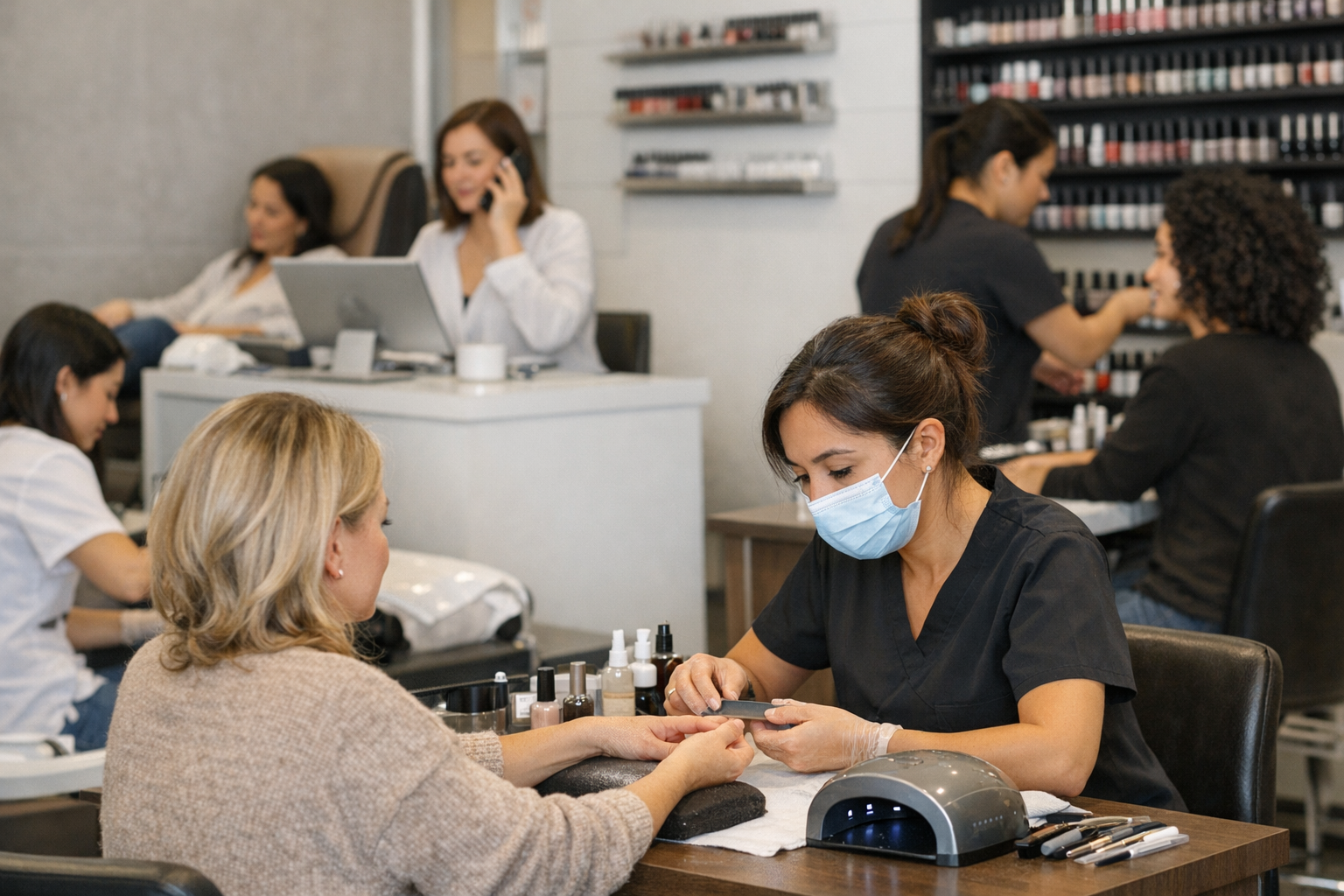
The movement between the waiting area, manicure tables, and pedicure thrones must be seamless.
A logical floor plan reduces the distance technicians must travel to access fresh towels or sanitation supplies.
Salons in Florida often prioritize open layouts to facilitate better movement during peak weekend hours.
Streamlining Manicure Table Turnaround
The time between one client leaving and the next arriving is vital for maintaining high revenue.
Standardized station resets include discarding single-use files and disinfecting all non-porous surfaces.
A disciplined reset protocol keeps the nail salon compliant with state board safety regulations.
Pedicure Area Flow Management
Pedicure services require intensive sanitation steps that can disrupt the operational flow if not managed.
Designating specific roles for cleaning basins while technicians prepare for the next service saves time.
This coordinated approach ensures the pedicure area remains professional and ready for immediate use.
Implementing Operational Control Systems
Daily management decisions should be guided by established salon manuals and operational checklists.
These documents provide clear instructions on how to handle unexpected staff absences or inventory shortages.
A standard operating procedure keeps the business running smoothly regardless of which manager is on duty.
Monitoring Service Consistency
Quality control is a management responsibility that involves regular observation of technician performance.
Owners should ensure that every gel application or structured manicure follows the salon’s specific steps.
This uniformity builds a reliable brand reputation for nail salons in New York and other competitive markets.
Daily Operational Debriefing
Ending each day with a quick review of the workflow helps identify areas for future improvement.
Discussing timing issues or station bottlenecks with the team allows for immediate operational adjustments.
Continuous refinement of these systems is the key to long-term growth in the professional nail industry.
