
How to Prevent Acrylic Nail Lifting
Preventing acrylic nail lifting requires thorough natural nail plate preparation, including removing the cuticle from the nail surface and dehydrating the plate. Professional technicians must ensure correct liquid-to-powder ratios and avoid touching the proximal nail fold with product to maintain a secure, airtight bond that lasts between service appointments.
Mastering Nail Plate Preparation
The foundation of any long-lasting acrylic service is the preparation of the natural nail.
Failure to remove the “true cuticle” or pterygium is the leading cause of early lifting.
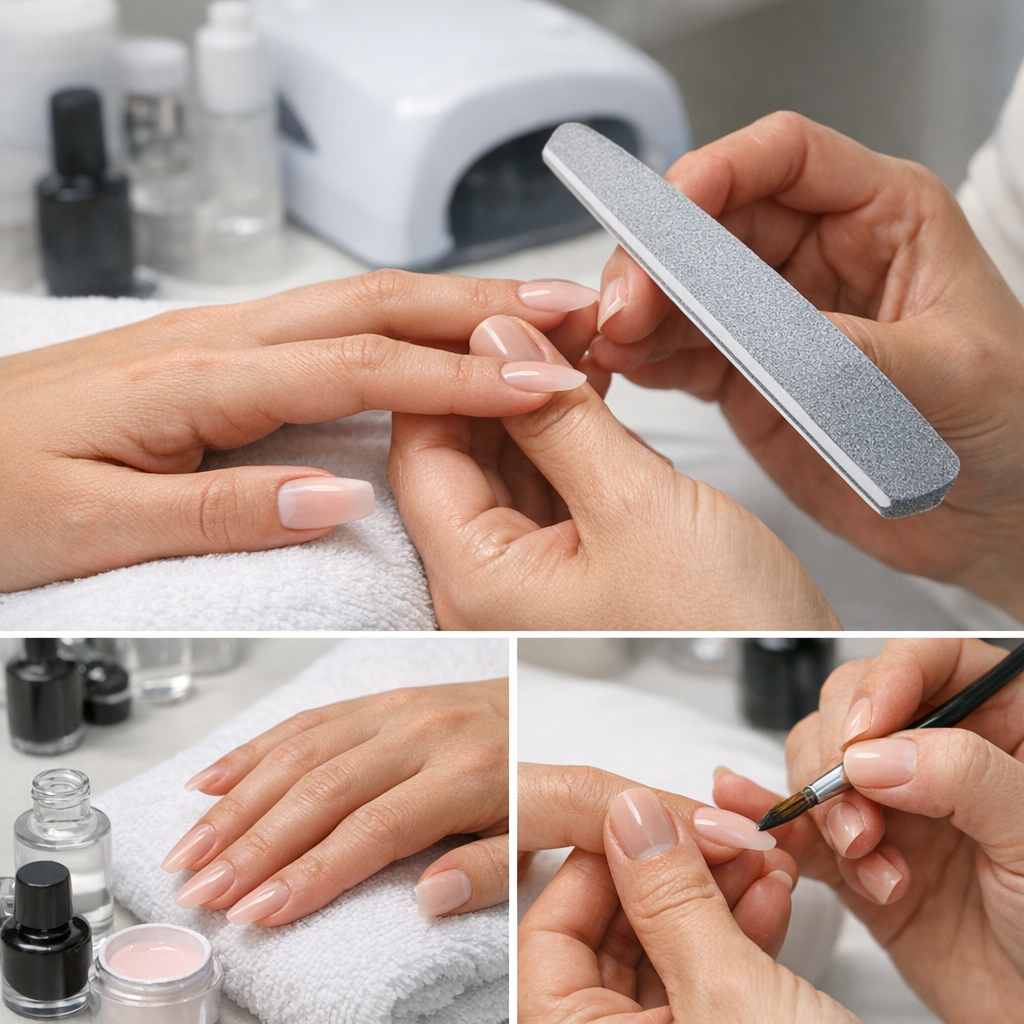
Use a high-quality pusher and an e-file bit to clear all non-living tissue from the plate.
Dehydration is the next critical step for technicians in high-humidity areas like Florida.
Apply a pH-balancing dehydrator to remove surface oils and temporary moisture.
Follow this immediately with a professional-grade primer to create a chemical bond.
Choosing the Right Primer
Acid-based primers provide a strong etch but must be used with extreme caution.
Non-acid primers work like double-sided tape and are preferred for sensitive clients.
Ensure the primer does not touch the surrounding skin to prevent irritation and lifting.
Perfecting Product Application
Correct monomer and polymer ratios are essential for structural integrity.
A bead that is too wet will shrink excessively, pulling away from the sidewalls.
Conversely, a bead that is too dry will not “wet” the nail surface, leading to air pockets.
Always leave a tiny margin—about the thickness of a hair—between the product and the skin.
If acrylic touches the eponychium, it will lift as the natural nail grows out.
Technicians in New York salons often use the “three-bead method” to control thickness and placement.
Refining the Apex and Sidewalls
A thin application at the cuticle and free edge prevents snagging and leverage lifting.
The apex must be placed correctly over the stress area to support the extension’s length.
Ensure the sidewalls are straight and flush with the natural nail’s growth path.
Troubleshooting Environmental Factors
Client aftercare plays a significant role in product retention and durability.
Educate clients in Texas about the dangers of using their nails as tools or over-exposure to water.
Daily application of high-quality cuticle oil keeps the enhancement flexible and prevents brittleness.
Contaminated monomer is another hidden cause of lifting and cloudy results.
Always use a clean dappen dish and discard any leftover liquid after every client.
Keep your brush clean to avoid transferring debris back into the product during application.
Maintaining Sanitation Standards
Proper sanitation prevents nail plate infections that can cause the enhancement to detach.
Always follow California state board standards by disinfecting all multi-use tools between services.
Healthy natural nails provide the best surface for acrylic adhesion and long-term wear.
