
Professional Strategies to Prevent Gel Polish Lifting
Lifting is one of the most common challenges faced by professional nail technicians in high-traffic salons across California. Ensuring long-lasting adhesion requires a deep understanding of nail chemistry and meticulous mechanical preparation.
When a gel manicure fails prematurely, it often leads to client dissatisfaction and lost revenue for the business. By following professional best practices, you can guarantee a durable finish that remains intact for three weeks or more.
Thorough Nail Plate Preparation
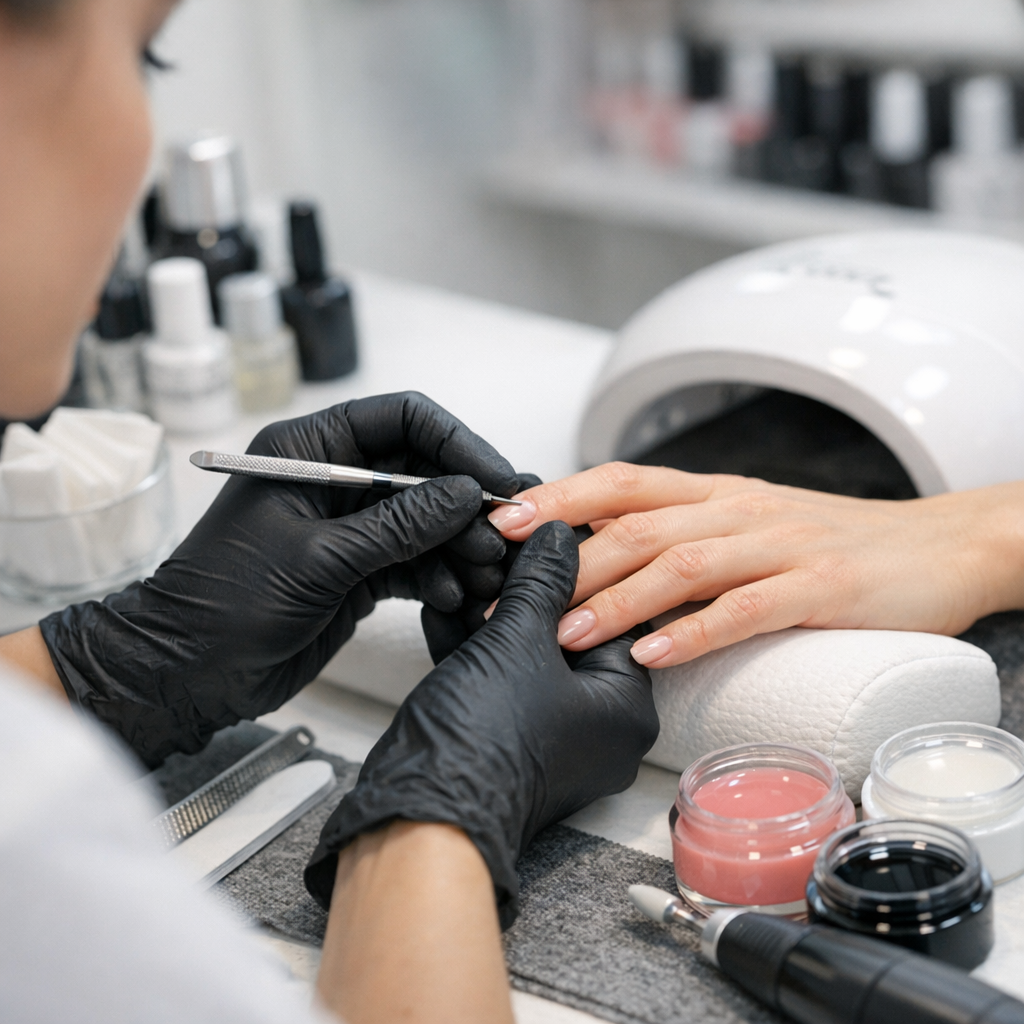
The foundation of any successful gel service starts with the complete removal of non-living tissue from the nail plate. Use a professional-grade E-file or a high-quality pusher to clear the proximal nail fold area effectively.
Residual cuticle left on the nail plate is the leading cause of lifting in the New York nail industry. After mechanical cleaning, use a 180-grit buffer to gently remove the natural shine without thinning the dorsal layer.
Dehydration and pH Balancing
Chemical preparation is just as vital as physical filing for long-term wear. Apply a professional dehydrator to remove surface oils and moisture that interfere with the polymer bonding process.
Follow up with a protein-bonded primer or an acid-free primer depending on the specific nail type of your client. This creates a double-sided adhesive bond between the natural keratin and the gel base coat.
Advanced Application Techniques
Avoid flooding the side walls or the eponychium with gel products during application. If the gel touches the skin, it creates a bridge that will inevitably pull away as the natural nail grows out.
Apply thin, even layers rather than one thick coat to ensure a proper finish. Thick applications often lead to incomplete curing, where the bottom layer remains soft and prone to peeling from the free edge.
Capping the Free Edge
Always cap the free edge of the nail with every layer of the service, including the base, color, and top coat. This seals the natural nail between the gel layers and prevents water from seeping under the product.
In busy Florida salons, environmental humidity can affect adhesion if the free edge is not sealed properly. A well-capped edge provides a protective barrier against daily wear and chemical exposure.
Troubleshooting Curing Failures
Ensure your LED or UV lamp is compatible with the specific photo-initiators in the brand of gel you are using. Inconsistent wattage or aging bulbs can lead to under-curing, which causes lifting and potential sensitivities.
Check the position of the client’s hand inside the lamp during the curing cycle. If the thumb is tilted, the gel may not receive direct light, leading to soft spots and lifting on the outer corners of the nail.
Sanitation and Tool Maintenance
Contaminated tools can introduce oils or debris back onto a prepped nail plate. Always use EPA-registered disinfectants between every client to maintain professional safety and hygiene standards.
Using worn-out files can create jagged edges on the nail plate that trap air. Switch to fresh abrasives regularly to ensure a smooth surface for the gel to adhere to effectively and consistently.
